
How to Prepare Your Assisted Living Facility for a Sale or Exit in 2026: The 36-Month PE-Buyer Playbook
Preparing your assisted living facility for exit in 2026 is a 36-month process, and the sector-specific value drivers matter more than in adjacent healthcare categories. The first 12 months tighten the operating story around private-pay mix and occupancy trajectory, the middle 12 fix pre-LOI diligence gaps around staffing costs and state-specific reg exposure, and the final 12 turn one offer into a real competitive process.
Preparing an assisted living community for sale is mostly about three things a buyer can check: the licence and how it moves to a new owner, the census and who pays for it, and the building. This guide works through each of them using CDC, NIC, state statute and REIT filings, then sets out what buyers ask for before and after a letter of intent and a 36-month plan to get ready.
Updated October 2026 · CT Acquisitions

Assisted living is one of the few founder-owned businesses where the buyer pool includes publicly traded REITs with billions to deploy. Welltower alone reported buying 681 seniors housing operating properties for $11.05 billion pro rata in 2025, according to its fourth-quarter supplemental filed with the SEC. Those buyers price communities on occupancy, rent growth and operating margin, and they read state survey histories and staffing records as closely as the financial statements. An owner who knows which of those measures is weak, and has two or three years to fix it, can change the outcome far more than any negotiation at the end.
The timing is unusual too. NIC data show assisted living occupancy back above 89% and construction starts at their lowest in years, so buyers are competing for existing, stabilized communities rather than building new ones. That favours owners who are ready. The sections below explain what “ready” means in this industry, with the source for each figure named alongside it.
Planning a sale in the next one to three years?
We work with assisted living and memory care owners on exit planning and sell-side processes, and we can tell you early which buyer types are likely to fit your community. No fee to you on buy-side introductions; sell-side mandates are paid on success at closing.
The assisted living market buyers are looking at in 2026
Buyers start with the national picture, and the national picture for assisted living is a market where demand is catching up with a supply pipeline that has nearly stopped.
How many communities there are and who owns them
The CDC’s National Center for Health Statistics counts 32,200 residential care communities (assisted living and similar settings) in the United States in 2022, with 1,313,600 licensed beds. Its National Post-acute and Long-term Care Study found that 81.5% had for-profit owners and 57.3% were part of a chain, down from 61.4% in 2020. The average community had 41 licensed beds, and 44.8% were certified to take Medicaid. One in five, 20%, either specialized in dementia care or had a dementia floor, unit or wing.
Those numbers describe the market most sellers are in: small, privately owned and often independent. Roughly four in ten communities are not part of a chain, which is exactly the population that regional operators and REIT-backed platforms look to for acquisitions.
Who lives in them
About 1,016,400 people lived in residential care communities on a given day in 2022, according to NCHS Data Brief No. 506. More than half, 52.8%, were 85 or older, and 44.1% had a diagnosis of Alzheimer disease or another dementia. That resident profile explains why memory care capability, fall prevention and clinical oversight show up so heavily in buyer diligence.
What residents pay
The CareScout 2025 Cost of Care Survey, released by Genworth in March 2026, put the national median cost of assisted living at $6,200 per month, or $74,400 a year, up 5% on the prior year, based on more than 25,000 rates collected between July and November 2025. Buyers compare your rate card with local medians, not the national figure, but the national figure tells you whether the market can absorb continued increases.
Occupancy and supply
NIC MAP data show assisted living occupancy reached 89.1% in the third quarter of 2026, up from 88.3%, with senior housing occupancy as a whole at 90.4% across the 31 primary markets. Sixteen of those 31 markets were at 90% or higher, occupied units rose to 644,428, inventory grew just 0.4% year over year and 16,159 units were under construction. Earlier in the year, NIC had reported assisted living occupancy of 87.9% in the first quarter and units under construction at their lowest level since 2012.
The supply story is the reason buyers are paying up for existing buildings. NIC estimates senior housing construction starts fell 67% to roughly 10,000 units in 2025, the fourth straight annual decline since 2021, and deliveries run about 10,445 units a year against more than 100,000 a year needed to hold occupancy at 90%. A buyer who cannot build will buy.
Memory care and rents
Memory care occupancy was 88.4% in the first quarter of 2026 across 99 NIC MAP markets, up 2.1 percentage points in a year, while memory care inventory grew by only 908 units, or 0.5%. Rent growth is cooling but still positive: NIC reported assisted living asking rent growth of 5.3% year over year in June 2026, down from 7.1% in March, with move-in rates running $660, or 9.4%, below asking rates. That last figure matters in diligence, because buyers will compare your asking rates with what new residents signed for.
What the market data means for your timing
Put together, the NIC figures describe conditions that favour sellers of stabilized communities: occupancy close to 90%, almost no new supply, rents still rising and cap rates expected to fall further. Those conditions will not last indefinitely. If construction restarts, new buildings will compete for residents and staff in the markets where they open, and buyers will become more selective. An owner who is two or three years from a sale should use the current period to get occupancy, rates and records into shape, so the community is ready whatever the market looks like when it is time to sell.
Who buys assisted living communities, and what they have paid
The buyer universe for assisted living runs from healthcare REITs and large operators to regional operators and private investors. The disclosed deals below come from the buyers’ own SEC filings and press releases.
Healthcare REITs
| REIT | Recent senior housing activity | Source |
|---|---|---|
| Welltower | 681 seniors housing operating properties (53,327 units) for $11.05 billion pro rata in 2025, about $207,215 per unit; $14 billion of acquisitions announced October 27, 2025; Barchester (UK) for about £5.2 billion and HC-One for £1.2 billion; Amica’s 38 Canadian communities closed April 1, 2026 at C$4.1 billion pro rata | Welltower 8-K filings |
| Ventas | $2.5 billion of senior housing investments closed in 2025 with 15.4% SHOP same-store cash NOI growth; $3.4 billion closed through Q2 2026 and a 2026 target raised to $4.5 billion | Ventas earnings releases |
| American Healthcare REIT | Over $950 million of acquisitions in 2025, about $590.0 million of it in SHOP; 25.2% SHOP same-store NOI growth | AHR Q4 2025 release |
| CareTrust REIT | $1.8 billion of investments in 2025 at a blended stabilized yield of 8.6%, including UK-based Care REIT plc in May 2025 | CareTrust releases |
| Sabra Health Care REIT | About $450 million of investments in 2025 at an estimated 7.5% average initial cash yield, including four managed senior housing properties for $150.5 million at a 7.0% yield | Sabra Q4 2025 release |
| National Health Investors | $392.3 million invested in 2025, its most active year since 2016, including four Compass Senior Living communities (339 units) for $74.3 million | NHI Q4 2025 release |
| LTC Properties | Five Wisconsin communities (520 units) for $195 million closed September 29, 2025; $353 million of SHOP acquisitions in 2025 | LTC 8-K and Q4 2025 release |
Two things in that table matter for a smaller owner. First, the REITs increasingly buy through SHOP or RIDEA structures, where they own the real estate and share in operating results through a management contract, rather than only through triple-net leases. That makes your operating performance, not just your building, part of the price. Second, deal sizes run from portfolios worth billions down to single-community and small-portfolio purchases like NHI’s four-community Compass deal, so a well-run regional owner can be on these buyers’ lists.
Operators
Operators are buyers and sellers at the same time. Sonida Senior Living completed its roughly $1.8 billion merger with CNL Healthcare Properties, which brought 69 communities, on March 11, 2026, giving it 153 owned communities and about 14,700 owned units. Brookdale Senior Living bought 30 previously leased communities (1,561 units) for $310.0 million in February 2025; by year-end 2025 it operated 584 communities in 41 states, down from 647 in March 2025, reported 80.9% weighted average occupancy and $6,347 of revenue per occupied unit for the year, and said it planned to sell 29 owned communities with 2,364 units in 2026. Brookdale’s disposals put more single assets on the market, which means sellers of independent communities will be compared with them.
Reading the REIT numbers as a seller
The figures REITs publish say a lot about how they will look at your community. Ventas reported 15.4% same-store cash NOI growth in its senior housing operating portfolio for 2025, and American Healthcare REIT reported 25.2% same-store NOI growth in its own. Buyers whose existing communities are growing income that quickly expect the same from any community they add, so they will ask what your NOI growth has been over the last two or three years and why. A flat or falling trend does not rule out a sale, but it moves you toward buyers who specialise in turnarounds.
The yields tell a second story. Sabra’s estimated 7.5% average initial cash yield and CareTrust’s 8.6% blended stabilized yield sit above NIC’s 6.2% average cap rate, reflecting the mix of property types, lease structures and operating risk in those portfolios. A seller should not assume that a headline cap rate from a large portfolio deal will apply to a single community, especially one with occupancy or survey issues. Welltower’s $207,215 average per unit covers 53,327 units across 681 properties; the price for any one building depends on its own market, age and results.
What this means for an independent owner
A buyer like Welltower or Ventas wants stabilized communities in markets it already knows, with an operator it trusts. A regional operator wants density near its existing buildings and will look at turnaround cases. A private investor or smaller operator may buy a community with a licensing or occupancy problem at a lower price. Knowing which group your community fits, today and after two years of work, is the first step in preparing it.
How assisted living communities are valued
Buyers price assisted living in three ways at once, and the gap between them tells you where value is being lost.
Cap rate on net operating income
Real estate buyers divide stabilized net operating income by a capitalization rate. NIC reports an average senior housing cap rate of 6.2% in the fourth quarter of 2025, down 17 basis points in the second half of the year, with core Class A independent living near 6.1%, active adult near 5.5% and freestanding memory care at 9.5% to 9.6%. NIC also reports that more than 84% of respondents to CBRE’s second-half 2025 senior housing survey expected further cap rate compression in 2026, against 57% a year earlier. A falling cap rate raises the price of every dollar of NOI, which is why improving NOI before a sale has more effect now than it did two years ago.
The spread between independent living and freestanding memory care is worth noticing. Buyers apply a higher cap rate, and so a lower price per dollar of income, to memory care buildings, reflecting staffing intensity and regulatory risk. A memory care wing inside an assisted living community is usually valued with the rest of the building; a standalone memory care community is valued as the riskier asset.
Price per unit
The second check is price per unit. NIC reports senior housing transaction volume of nearly $27 billion in 2025, up from $17.3 billion in 2024, with an average price per unit of $182,800 in the fourth quarter, up 29% on a year earlier. Disclosed deals give a range around that average: Welltower’s 2025 acquisitions averaged $207,215 per unit, NHI’s Compass purchase works out to about $219,174 per unit and LTC’s Wisconsin purchase to about $375,000 per unit. A community priced well above local per-unit comparables on a cap rate basis will draw questions; one priced well below suggests income that could be improved.
Operating earnings for smaller and operator-only deals
Smaller communities, and sales of an operating business without the real estate, are more often priced on EBITDA or, where rent is paid to a landlord, EBITDAR. The multiple depends on size, occupancy stability, payer mix and survey history, and published data for single-community deals is thin, so we do not quote a single range here. What matters for preparation is that every adjustment you claim to earnings must survive a buyer’s quality of earnings review, and that rent between you and your own property company is reset to market before a buyer sees it.
A worked example: what the levers are worth
The figures below are an illustration, not a valuation, but they show why small operating changes carry large price effects in this industry. Take a 60-unit community charging the CareScout national median of $6,200 a month.
- Occupancy. Moving from 85% to 90% occupancy adds 3 occupied units. At $6,200 a month that is $223,200 of additional annual revenue, much of which falls to net operating income because staffing and building costs do not rise in step.
- Cap rate effect. Every $100,000 of additional net operating income is worth about $1,612,903 to a buyer applying NIC’s 6.2% average senior housing cap rate, and about $1,052,632 at the 9.5% rate NIC reports for freestanding memory care.
- Move-in discounts. NIC’s national gap of $660 a month between asking and move-in rates, applied to 10 new residents in a year, is $79,200 of annual revenue given up. Tightening concessions before a sale is one of the quickest ways to lift income.
The same arithmetic works in reverse. A community whose reported income includes adjustments a buyer will not accept loses value at the same rate, which is why documentation matters as much as performance.
The changes that move an assisted living valuation
Each lever below is tied to a figure a buyer will compare you with. Work on the ones where your community is furthest from the benchmark first.
1. Occupancy against your market
Buyers start with occupancy because it drives everything else. With NIC reporting national assisted living occupancy of 89.1% in the third quarter of 2026, and 16 of 31 primary markets at 90% or more, a community in the low 80s will be treated as a turnaround. Brookdale’s 80.9% average for 2025 shows how a large operator’s portfolio compares. The work here is local: referral relationships with hospitals and home health agencies, a response time standard for inquiries, and tracking tour-to-move-in conversion monthly so a buyer can see a trend rather than a single month.
2. Payer mix and Medicaid exposure
NCHS reports that 16.9% of residential care residents were Medicaid beneficiaries in 2022, down from 17.5% in 2020, and 44.8% of communities were Medicaid-certified. Medicaid waiver residents provide steady census, but at rates set by the state rather than the market. Buyers value private pay revenue more highly, so a seller with heavy waiver exposure should document how stable the state rate has been and whether there is room to shift the mix over time.
If you take Medicaid home and community-based services funding, you must also meet the CMS HCBS Settings Rule. CMS issued it in January 2014, and the transition period for existing settings ended March 17, 2023. Provider-controlled residential settings paid through HCBS must give residents a lease or equivalent agreement, privacy with lockable doors, choice of roommates, access to food at any time and visitors at any time. A buyer will check that your resident agreements and house rules comply, because a finding of non-compliance puts waiver revenue at risk.
3. Memory care capacity
With 44.1% of residents diagnosed with dementia, according to NCHS, and memory care occupancy at 88.4% on very little new supply, a secure memory care unit is a strong asset. But it carries its own staffing, training and licensing requirements in most states, and the 9.5% to 9.6% cap rate NIC reports for freestanding memory care shows that buyers price the risk. Adding memory care makes sense if you can staff and license it well before a sale and show at least a year of stable results.
4. Rate discipline
Asking rent growth of 5.3% nationally in mid-2026, with move-in rates $660 below asking, means buyers will look closely at the difference between your rate card and your signed agreements. Keep a clear record of rate increases by resident, level-of-care charges and any move-in concessions. A rising revenue per occupied unit, compared with Brookdale’s published $6,347 for 2025 and the CareScout local median, is one of the strongest signals you can show.
5. Owner dependence
Many independent communities are run by the owner, who may also be the licensed administrator. Buyers discount that heavily, because the licence, the referral relationships and the staff all depend on one person. Hiring and training an executive director or administrator who can run the community without you, and letting them run it for a year or more before a sale, removes one of the most common reasons for lower offers and longer earnouts.
6. Survey history
Every state inspects licensed assisted living, and buyers request the last several years of survey reports and plans of correction. Repeat deficiencies in the same area, or anything involving resident harm, will be read as a sign of how the community is run. The fix takes time: clean surveys over two or more cycles are the only evidence buyers accept.
7. Staffing and wages
Labor is the largest cost line. BLS data show employment in continuing care retirement communities and assisted living facilities for the elderly reached 1,022,100 in September 2026, up from 1,013,900 a year earlier, and average hourly earnings for nonsupervisory workers were $23.00 in August 2026 against $22.57 a year earlier. Buyers will compare your wages and agency use with those benchmarks and check compliance with state minimums. In Florida, for example, Rule 59A-36.010 sets minimum weekly staff hours by census (253 hours for 16 to 25 residents and 416 hours for 56 to 65 residents) and requires at least one staff member awake at all hours once a community has 17 or more residents. Keep staffing schedules and payroll records that show you meet your state’s rules every week, not just on survey days.
8. The real estate decision
If you own the building, you can sell the real estate and the operations together, sell only one, or sell the property and lease it back. REITs buying through SHOP or RIDEA structures want both, while triple-net investors want the building and a strong tenant. Decide which buyer you are preparing for, because it changes what you fix first. Sellers who lease from a related property company should have the rent appraised at market value before a sale.
9. Clinical systems and records
Buyers want electronic care records, medication administration records and incident reports they can review without a site visit. Communities still on paper face longer diligence and more questions. Moving to a recognized senior living EHR at least a year before a sale gives you clean data to show. It also lets a buyer check medication errors, care plan updates and incident follow-up quickly, which shortens confirmatory diligence and reduces the chance of surprises after the letter of intent.
10. Earnings quality
Owner salaries, family members on payroll, personal expenses and related-party rent all need to be documented and adjusted. Buyers will run a quality of earnings review, and every adjustment they reject reduces the price by the adjustment times the multiple or cap rate. Common problem areas in assisted living are management fees paid to an owner’s affiliated company, family members employed at above-market pay, deferred maintenance booked as one-off costs and insurance premiums that do not reflect current claims experience.
11. Resident funds and deposits
States regulate how communities hold residents’ money. Florida’s statute, section 429.27, requires resident funds to be kept in trust separately from facility funds, with a verified statement to each resident at least every 3 months. Buyers check that trust accounts reconcile and that deposits are recorded as liabilities, not revenue.
12. Falls and liability
NCHS reports that 27.1% of residential care residents had a fall recorded as an adverse event in 2022, up from 20.8% in 2020, while 18.7% had an emergency department visit and 11.8% an overnight hospital stay. Falls drive both claims and survey findings. A documented fall prevention program, incident trend data and insurance loss runs that show claims are under control will help with both buyers and insurers.
13. Referral sources
A community that depends on one hospital discharge planner or one placement agency has a concentration risk buyers will price. Referral concentration is easy to miss from inside the business, because a single good relationship can feel like a strength. Track move-ins by source and build at least three or four steady referral channels: hospitals and their discharge planners, home health and hospice agencies, physicians, placement agencies and your own website and past residents’ families. A buyer that can see where each move-in came from, and what each source costs, can judge how durable your occupancy is.
14. Ancillary revenue
Level-of-care fees, medication management, transportation and similar services add revenue, but only count toward value if they are billed consistently and documented in resident agreements. Buyers will check that level-of-care fees match the assessed needs recorded in each resident’s care plan, because charges that are not supported by assessments can be challenged by families and, for waiver residents, by the state.
Want help choosing which levers to work on first?
We can review where your community stands against the benchmarks on this page and help you plan the work in the right order for the buyers most likely to be interested.
Choosing a structure: real estate, operations or both
Many assisted living owners hold the building and the operating business in separate companies, and the way they are sold affects both the buyer pool and the price.
Selling the real estate and operations together
This is what most REIT buyers using SHOP or RIDEA structures want. They own the property and share in operating results through a management agreement with an operator they choose, which may be a large national group or a regional manager. Welltower’s Barchester acquisition, which combined 111 RIDEA communities with 150 triple-net communities and 21 developments, shows the two models can sit side by side even within one transaction. If you sell both together, the buyer will usually replace you as operator, so the quality of your staff and systems matters as much as your occupancy.
Selling the real estate and leasing it back
Triple-net investors buy the building and lease it to an operator, who pays rent and all property costs. Sabra’s 2025 investments at an estimated 7.5% average initial cash yield, and CareTrust’s at a blended 8.6% stabilized yield, give a sense of the returns these investors seek. If you sell the property and stay on as tenant, the rent you agree to becomes a fixed cost that the next buyer of your operating business will scrutinise, so it should be set at a level your operations can cover comfortably.
Selling only the operating business
Owners who lease their building from a third party sell the operating company and assign or renegotiate the lease. The landlord’s consent is usually required, and the buyer will price the business on EBITDAR, with rent as a key input. Lease length and renewal options are among the first things a buyer will review.
Stock or asset sale
The choice between selling the shares of the operating company and selling its assets has licensing consequences as well as tax ones. In Pennsylvania, a transfer of stock is not treated as a change of ownership under 55 Pa. Code section 20.57, while in New York any transfer of 10% or more of an operator’s ownership needs prior approval. Your tax adviser and healthcare counsel should review both sides before the letter of intent.
Communities with Medicaid waiver residents
Medicaid funding changes the preparation work. According to NCHS, 44.8% of residential care communities were Medicaid-certified in 2022, and 16.9% of residents were Medicaid beneficiaries. If your community is one of them, three extra steps apply.
- HCBS Settings Rule compliance. Since the CMS transition period ended on March 17, 2023, communities paid through Medicaid home and community-based services must meet the rule’s requirements on leases, privacy, roommate choice, food access and visitors. Review resident agreements and house rules against those requirements before a buyer does.
- Provider agreements after a sale. Medicaid waiver participation is tied to the provider, and a new owner generally has to enrol or update its enrolment with the state Medicaid agency. Build that step into the change of ownership timeline so waiver payments are not interrupted.
- Rate exposure. Waiver rates are set by the state. Show buyers the history of rate changes in your state and how your costs have moved against them, so they can judge the margin on those residents.
Memory care communities and units
Memory care adds value and diligence in equal measure. NIC reports memory care occupancy at 88.4% with inventory growing by only 908 units in a year, so demand is strong. But NCHS data showing 44.1% of residents with a dementia diagnosis also means buyers look for evidence that dementia care is delivered safely across the whole community, not only in a secured unit. Expect questions on staff training hours, secured-unit licensing where your state requires it, elopement incidents and the use of antipsychotic medication. Communities that can show stable staffing, low incident rates and good survey results in their memory care units are the ones that benefit from the strong demand rather than being discounted for the risk.
Telling staff and residents
Confidentiality matters more in assisted living than in most businesses, because residents and their families make long-term decisions based on who runs the community, and staff can leave quickly if they fear change. Several states set the timing for you. California requires written notice to each resident at least 30 days before a transfer of a residential care facility for the elderly, and Florida requires the new owner to notify residents in writing within 7 days of receiving the new licence. Plan the announcement with the buyer: who tells residents and families, what is said about care staff and rates, and how key employees such as the executive director and wellness director will be retained through closing and beyond. Retention agreements for a small number of key people are common and are usually funded or shared by the buyer.
What each type of buyer checks most closely
All buyers review the same package, but each group weighs it differently, and preparing for the right one saves time.
- REITs buying through SHOP or RIDEA structures focus on the market and the building first: local occupancy and new supply from NIC data, the age and condition of the property, and whether an operator they already work with can take over. They need clean monthly financials to plug into their own models and usually commission third-party property, environmental and quality of earnings reviews.
- Triple-net investors look at the tenant’s ability to pay rent. They study rent coverage, the operator’s track record across other buildings and the terms of the lease, including renewal options and capital spending obligations.
- Regional operators look at how the community fits their existing buildings: shared management, referral relationships, purchasing and staff. They are often more comfortable than REITs with communities below stabilized occupancy, because they believe they can fix them, and they look hard at staffing, survey history and the executive director.
- Private investors and smaller groups often buy single communities, including those with licensing or occupancy problems. They usually rely on bank or SBA financing, which brings lender requirements on appraisals, licensing and the borrower’s operating experience into the timeline.
Mistakes that cost assisted living sellers money
- Going to market straight after a poor survey. A serious deficiency in the last cycle will dominate every conversation. It is usually better to wait for a clean follow-up survey than to sell into the finding.
- Starting the licensing process late. Statutory notice periods, such as Florida’s 60 days and Texas’s 30 days, cannot be shortened. Leaving them until the purchase agreement is signed adds weeks to closing and gives the buyer time to reconsider.
- Comparing your community with portfolio prices. Averages from REIT portfolio purchases are not a price for a single building. Use local comparables and the community’s own income.
- Leaving related-party rent unadjusted. If you pay yourself above- or below-market rent through a property company, the buyer will reset it, and the reset will change the earnings they pay for.
- Ignoring move-in concessions. Discounts to new residents reduce income that a buyer will capitalise. NIC’s national gap of $660 a month between asking and move-in rates shows how common they are.
- Announcing too early. Staff and residents hearing about a sale before there is a committed buyer can lead to departures and move-outs that weaken the community during the process.
Licences and change of ownership: the state rules that set your timeline
Assisted living is licensed by the states, not the federal government, and in most states the licence does not transfer to a buyer. The new owner applies for its own, often 30 to 60 days before closing, and some states treat a stock sale differently from an asset sale.
Five states show the range of rules a seller may face.
- Florida. The seller must notify the Agency for Health Care Administration in writing at least 60 days before the change of ownership under section 408.807, and stays responsible for lawful operation until AHCA licenses the buyer. The buyer’s application must reach AHCA at least 60 days before the change under section 408.806. After the sale, section 429.12 requires the new owner to notify residents in writing within 7 days of receiving the new licence.
- California. A residential care facility for the elderly must give written notice of intent to sell to the Department of Social Services and to each resident at least 30 days before the transfer, and the buyer must apply for a licence within five days of the seller accepting the offer, under Health and Safety Code section 1569.191. Under 22 CCR section 87111, CDSS decides within 60 days of a complete application, and a qualifying buyer can receive an emergency approval to operate while it waits.
- Texas. Under 26 TAC section 553.35 an assisted living licence cannot be transferred. The new operator files a change of ownership application with HHSC at least 30 days before the change, including the notarized Change of Ownership Transfer Affidavit, HHSC Form 1092, signed by both parties.
- Pennsylvania. Under 55 Pa. Code section 20.57, a Department of Human Services certificate of compliance is issued to a legal entity for a specific facility, cannot be transferred and becomes void on a change in ownership of that entity. A transfer of corporate stock is not treated as a change of ownership, so the structure of the deal decides whether a new certificate is needed.
- New York. Social Services Law section 461-b requires the department’s prior written approval for any transfer of 10% or more of the ownership or voting rights of an adult care facility operator. Smaller transfers need notice at least 90 days before they take effect.
These rules decide the length of the period between signing and closing. A Florida sale needs 60 days of notice before closing at a minimum, and a New York transfer of control needs regulatory approval that cannot be scheduled precisely. Build the state process into the timeline at the letter of intent stage, and check whether your state, like Pennsylvania, treats a stock sale differently, because that can shorten the process.
Licensing points to settle in the purchase agreement
Because the buyer usually needs its own licence, the purchase agreement has to say what happens between signing and the day the new licence is issued.
- Who files and when. Name the party responsible for each filing and tie the dates to the statute, for example 60 days before closing in Florida or 30 days in Texas.
- Who operates in the gap. In Florida the seller stays responsible for lawful operation until AHCA licenses the buyer, and in California a qualifying buyer may receive an emergency approval to operate while CDSS decides. Where neither applies, the parties may need an interim operations or management agreement.
- The closing condition. Most buyers make issuance of the new licence a condition of closing. Sellers should ask for a reasonable outside date so the deal does not stay open indefinitely if the regulator is slow.
- Resident notices. Agree the wording and timing of notices required by statute, such as California’s 30-day notice to each resident and Florida’s notice from the new owner within 7 days of licensing.
What buyers ask for before a letter of intent
Before making an offer, a serious buyer will ask for a package of information. Having it ready, accurate and consistent is the most direct way to get stronger offers and fewer changes later.
Financial statements
At least three years of monthly income statements plus the trailing twelve months, prepared on a consistent basis, with a balance sheet and a schedule of real estate and debt. Buyers want to see revenue split between base rent, level-of-care charges and ancillary services, and expenses split between labor, food, utilities, insurance and management, so they can compare each line with other communities they own or have reviewed.
Earnings bridge
A reconciliation from reported net income to adjusted EBITDA or EBITDAR, with each adjustment documented. Related-party rent should be shown at market. Expect each adjustment to be supported by an invoice, payroll record or contract, because a buyer’s accountants will test them one by one.
Census and payer history
Monthly census, move-ins and move-outs with reasons, and the split between private pay, Medicaid waiver and any other payers. Buyers will compare your occupancy trend with NIC’s market data for your area. Reasons for move-outs matter: deaths and moves to skilled nursing are expected in this industry, while moves to a competitor suggest a pricing or service problem.
Rate history
Asking rates, signed rates and concessions for new residents, plus annual increases for existing residents. Given NIC’s finding that move-in rates run 9.4% below asking nationally, expect buyers to test this closely.
Staffing records
An anonymized roster with roles, start dates, pay rates and full-time or part-time status, plus agency spending and evidence that staffing meets state minimums. Turnover by role and the tenure of the executive director, wellness director and lead caregivers are often requested at this stage, since buyers know how hard those roles are to fill.
Survey and licence records
The current licence, recent survey reports, plans of correction, any complaints and their outcomes, and local permits such as fire inspection and food service. If your state requires an administrator licence, include the administrator’s credentials and a note on who would hold the role after closing.
Resident agreements and funds
Template resident agreements, evidence of compliance with the HCBS Settings Rule if you take waiver residents, and trust account reconciliations.
Clinical and incident data
Fall and incident logs, hospital transfers and any related claims, together with insurance loss runs for several years. Buyers will compare your fall rate with the 27.1% NCHS figure for residential care residents, so show the trend and what you changed when it rose.
Building and capital spending
A capital expenditure history and plan, recent inspection reports and, ideally, a property condition assessment commissioned before going to market.
Referral data
Move-ins by referral source over at least two years, showing that the community does not depend on a single channel.
After the letter of intent: confirmatory diligence and what derails deals
Once a letter of intent is signed, the buyer checks everything in the package and more. The issues below are the ones that most often lead to a lower price, a holdback or a deal that does not close.
- A licensing timeline that slips. If the buyer’s change of ownership application is late or incomplete, closing moves. In states like Florida and Texas the notice periods are fixed in statute or rule.
- Serious survey findings. A recent finding involving resident harm, or a pattern of repeat deficiencies, usually leads to a price reduction or a special indemnity.
- Staffing below the state minimum. Buyers compare payroll with required hours. A shortfall is both a regulatory risk and a sign that reported costs are too low.
- HCBS compliance gaps. If resident agreements or house rules do not meet the Settings Rule, waiver revenue is at risk.
- Resident funds not held in trust. Commingling resident money with operating funds is a regulatory problem in states like Florida and a red flag for buyers everywhere.
- Claims history. Open claims related to falls, injuries or deaths lead to indemnities, escrows or price changes.
- Exclusion screening. Buyers screen owners and key staff against the federal exclusion list maintained by the HHS Office of Inspector General. A match can stop a deal involving Medicaid revenue.
- Deferred capital spending. Roofs, HVAC, call systems and life safety systems are inspected. Repairs the buyer finds become deductions from the price.
- Earnings adjustments that do not hold. Each rejected adjustment reduces the price by its amount times the multiple or cap rate.
Why a sell-side quality of earnings review pays
Many owners commission their own quality of earnings review before going to market. It finds the adjustments a buyer will reject while there is still time to fix the records, and it gives buyers more confidence in the numbers, which tends to mean fewer price changes after the letter of intent. For a community being sold to a REIT or a large operator, the buyer will commission its own review regardless, so the question is only whether you see the findings first.
A 36-month plan for an assisted living exit
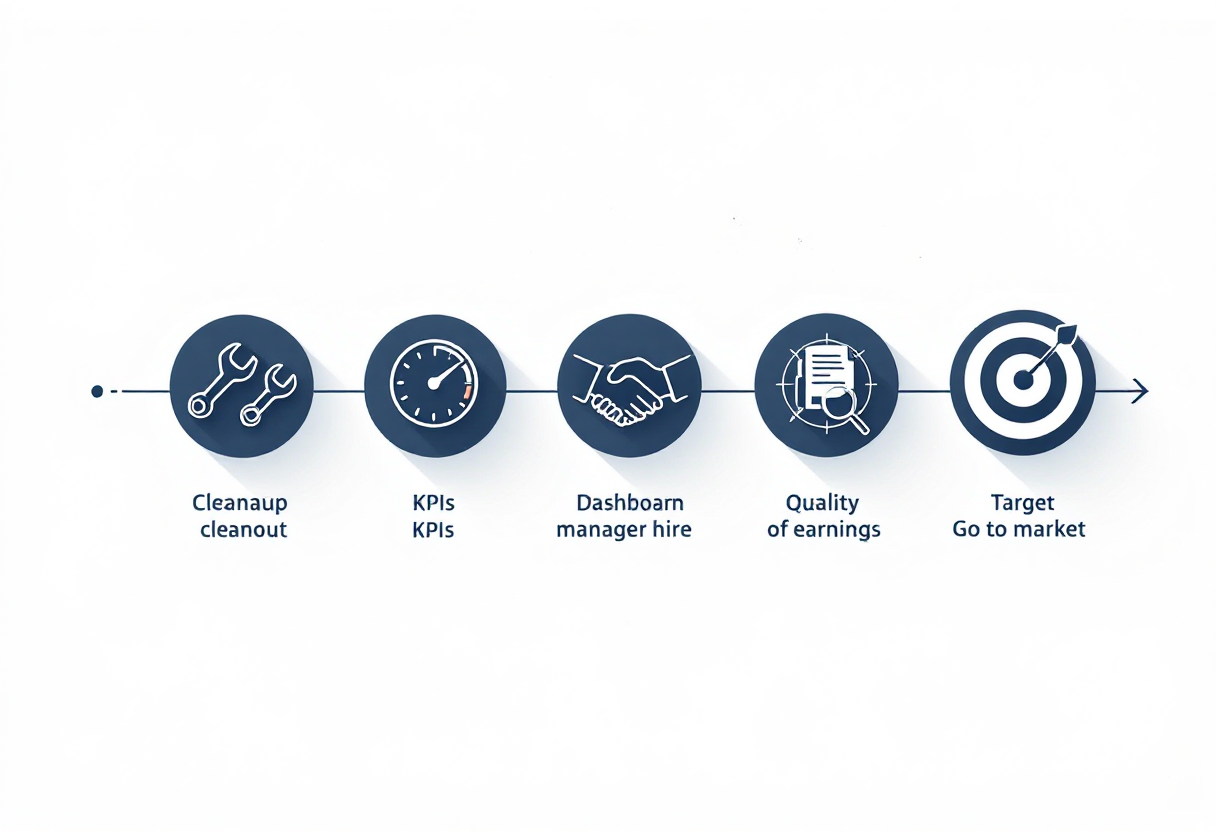
T-36 months: assess and clean up
Compare your occupancy, rates, staffing and payer mix with the NIC, CareScout, BLS and state benchmarks on this page. Review survey history, resident agreements, trust accounts and HCBS compliance. Decide whether you are preparing to sell the real estate, the operations or both, and start the leadership change if you are the administrator. This is also the time to compare your community’s survey record with your state’s public reports, so you know what a buyer will find.
T-24 months: build the record
Move to monthly financial statements on a consistent basis, track census, referral sources and rate history monthly, and put clinical records into an electronic system. Fix capital items buyers will see. If you are adding or expanding memory care, do it now so you have results to show. Start recording move-in rates against asking rates, referral sources and staff turnover by role every month, because those series take time to build and buyers want at least two years of them.
T-12 months: prove it works without you
Let your executive director run the community. Reset related-party rent to market, document every earnings adjustment and consider a sell-side quality of earnings review. Check that your licence and local permits are current and that you understand your state’s change of ownership process.
T-6 months: prepare the package
Assemble the pre-LOI package described above, commission a property condition assessment if you own the building, and work with your advisor on buyer selection and positioning. Decide in advance how you will handle staff and resident communication, and which key employees will be offered retention agreements, so the plan is ready if word of the process spreads.
T-3 months: go to market
Approach selected buyers confidentially, under NDA, and compare offers on price, structure, timing of the state licensing process and any holdbacks or earnouts. Plan the change of ownership filings so they meet the statutory deadlines before closing. Once a letter of intent is signed, agree with the buyer who files what and when, using your state’s rules: 60 days in Florida, 30 days in Texas, a five-day application window after offer acceptance in California, and prior approval for transfers of 10% or more in New York.
How CT Acquisitions works with assisted living owners
CT Acquisitions is an M&A advisory firm for founder-owned businesses, working sell side, buy side and on exit planning. With assisted living owners we usually start two or three years out, comparing the community with the benchmarks above and agreeing which issues to fix first. When it is time to sell, we prepare the information buyers will ask for, identify the buyers most likely to value your community, from REITs and large operators to regional groups and private investors in our network of 500+, and approach them confidentially and in parallel so offers can be compared on the same terms. We coordinate the state change of ownership timeline with your counsel so the licensing steps do not delay closing. No fee to you on buy-side introductions; sell-side mandates are paid on success at closing.
Frequently Asked Questions
How long should I plan to prepare before selling my assisted living facility to a REIT or PE buyer?
The owners who get top-quartile pricing start preparing 24 to 36 months before going to market. The minimum useful prep window is 12 months because the highest-leverage levers (pushing occupancy from sub-85% to 90%-plus, installing a credentialed Executive Director, shifting payer mix toward 70% private-pay, completing a sell-side QoE) need 12-plus months of clean trailing-twelve-months data to be credible to a REIT or PE buyer. Owners who try to sell in under 6 months typically leave 15% to 30% of enterprise value on the table, and in some states the CHOW process alone takes 90 to 180 days, which adds to total timeline regardless of how well prepared the operating business is.
What is a realistic per-unit price and EBITDA multiple for a 60-unit assisted living facility in 2026?
For a stabilized, Class A 60-unit AL in 2026, the per-unit range runs $150K to $400K depending on market, with the national rolling four-quarter average at $182,800 (NIC MAP, December 2025). Top markets (New York at $311,525, Phoenix at $267,950, Boston at $241,879) price well above the national average. The EBITDA-multiple lens for the same facility runs 7x to 12x on an owner-operator integrated basis for a healthy operator with 90%-plus occupancy and 70%-plus private-pay (industry estimate from Sherman & Roylance, Breakwater M&A, Capstone). A non-core, sub-85% occupancy facility prices closer to 3.5x to 5x EBITDA or $100K to $150K per unit. The 36-month prep playbook moves you from the bottom of these bands toward the top.
Should I get a quality of earnings report done before going to market?
For AL facilities at $1M-plus EBITDAR, yes. A sell-side QoE costs $35K to $75K for a single community and up to $150K for multi-community portfolios or CCRCs (Eton Venture Services, 2025; Bridgepoint Consulting). The ROI is leverage. If your QoE supports a 0.5x to 1x multiple uplift on a $5M EBITDAR business at a 7x baseline, that is $2.5M to $5M of additional sale price for a $50K to $75K investment. More importantly, a pre-market QoE surfaces revenue recognition issues (community fee timing, entrance-fee deferral, level-of-care reassessment lags), working capital surprises, and add-back weaknesses while you can still fix them, rather than during exclusivity when the buyer re-trades the deal.
What occupancy level do REIT and PE buyers want to see before they will pay top multiples?
90%-plus stabilized occupancy with a waitlist is the threshold for top-quartile pricing. National AL occupancy stood at 87.7% Q4 2025 and 87.9% Q1 2026, and NIC projects above 90% in 2026 (NIC MAP). Below 80% occupancy moves your asset into distressed pricing (7.5% to 9% cap rate vs. 6.75% to 7% for stabilized Class A). On a $5M NOI facility, the difference between an 8% cap rate and a 6.5% cap rate is $14M of enterprise value. Buyers also look at the ratio of new move-ins to move-outs as a forward-looking indicator: 1.3x or higher is growing, below 1.0x is shrinking.
Will my state license transfer to the new owner, or does the buyer need to go through a CHOW process?
The state license does not transfer automatically in any state. Every state requires a Change of Ownership (CHOW) application, with timing ranging from 30 days in some states to 180 days in Pennsylvania and CON-required states like New York. The buyer cannot operate without a CHOW-approved license, and the lender will not fund without it. This is why CHOW timing must be flagged honestly at LOI and built into the exclusivity period. Most well-run AL deals run 60 to 120 days of exclusivity to accommodate CHOW, which is materially longer than other industries. Sources: Arnall Golden Gregory CHOW practice publications; Pennsylvania DOH CHOW guidance; Minnesota DOH CHOW application; New York State DOH CON program.
Should I sell my facility's real estate with the business or hold it back as a separate sale-leaseback?
The right answer depends on whether your real estate is owned in the same entity as the operating business and whether your facility profile fits a REIT's lease underwriting (typically EBITDAR coverage of 1.3x or higher and stabilized Class A asset quality). Holding the real estate separately at fair market value triple-net rent often lifts the implied EBITDA multiple on the operating business because the buyer is not forced to underwrite real estate exposure. A sale-leaseback can convert 100% of property market value to cash vs. 70% to 80% LTV via traditional refinancing (Plante Moran sale-leaseback primer). Recent senior living sale-leaseback lease rates: 6.93% initial with CPI escalators (Senior Housing News, 2025). Make this decision before going to market, document it cleanly in your data room, and present the buyer with three options at LOI: assume the lease, buy the real estate at appraised value, or execute a parallel sale-leaseback with a healthcare REIT (LTC, Sabra, CareTrust often participate; Welltower for institutional-quality assets).
What to Do Next
The assisted living owners who get the top-quartile multiple all do the same three things. They start preparing 24 to 36 months before they want to be out. They install a state-licensed Executive Director 18-plus months pre-sale, so the operating license sits with the ED and not the owner. And they invest in a sell-side QoE before any buyer sees a CIM, so the headline EBITDAR is locked in with documentation.
If you are 12-plus months from a potential exit and want a structured pre-sale optimization roadmap, CT Acquisitions has senior living operations specialists in our partner network who run multi-quarter prep engagements covering occupancy growth, payer-mix repositioning, ED succession, state-survey defense, and sell-side QoE coordination. If you are 6 to 12 months out and ready to start the sell-side process, our M&A advisory team runs the buyer outreach across REIT, operator-platform, and PE-sponsor channels. No fee to you on buy-side introductions; sell-side mandates are paid on success at closing. Either way, the first 30 minutes are free.
The 2025 cycle was the strongest senior living M&A market in more than a decade. Cap rates are still compressing. Occupancy is projected above 90% in 2026 for the first time in the history of the NIC MAP series. Construction starts collapsed to their lowest level since Q2 2009. The demand-supply gap is widening (NIC MAP estimates a need for 549,000 additional senior living units by 2028 and 806,000 by 2030). The owners who prepare over the next 24 to 36 months capture that backdrop. The owners who do not get a price that reflects what their facility looked like two years ago.
Ready to talk?
Schedule a 30-minute exit-readiness call
Or read more: How to Sell an Assisted Living Business (active sale guide) | How to Sell a Home Health Agency | Sell Your Business (full vertical index)
Ready to Explore Your Options?
A 30-minute confidential conversation is all it takes.
