
What Is a Cash-and-Stock Deal? The 2026 Guide to Mixed Consideration
Christoph Totter · Managing Partner, CT Acquisitions
20+ home services M&A transactions across HVAC, plumbing, pest control, roofing · Updated April 27, 2026
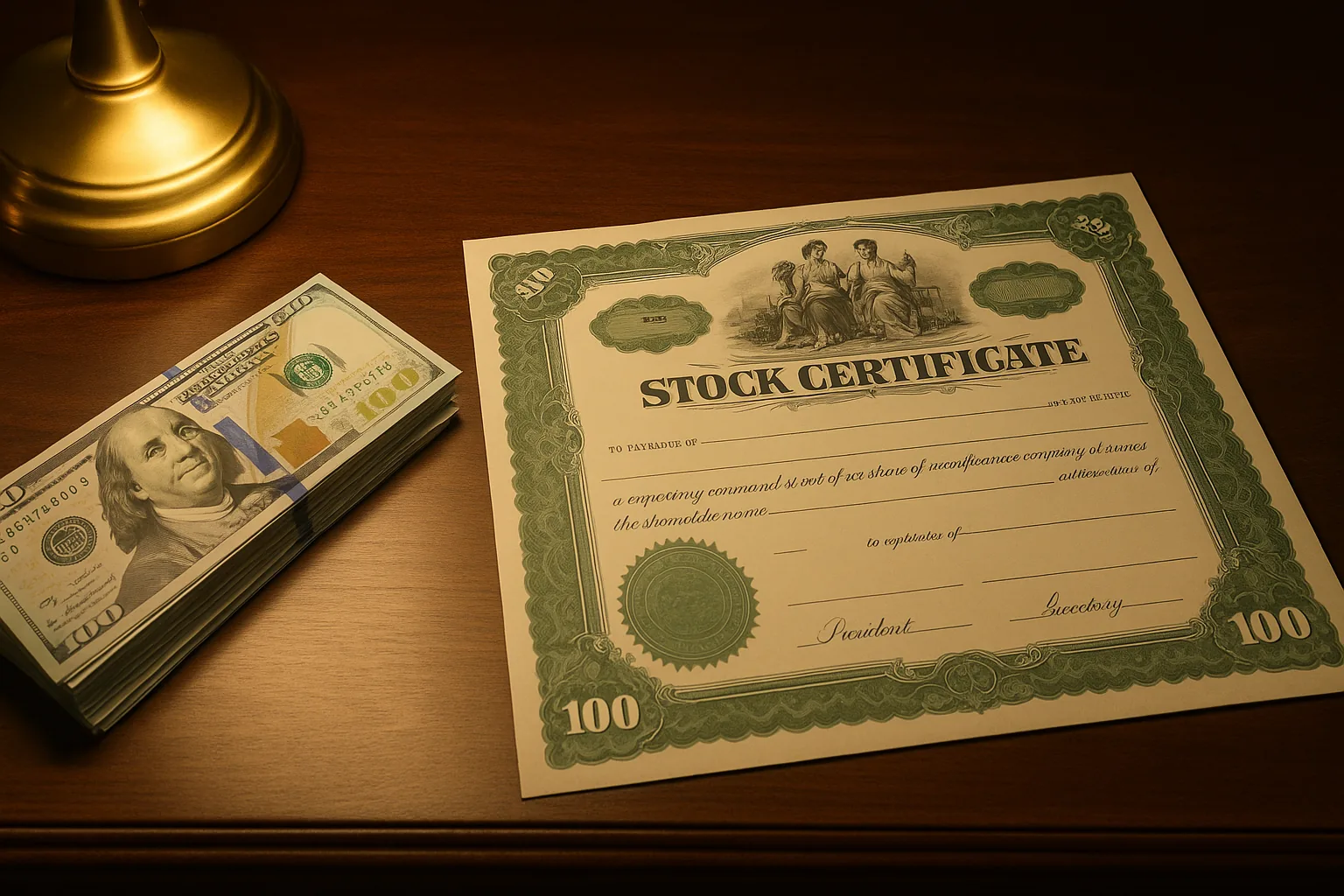
“A cash-and-stock deal is the middle path. Some cash for certainty, some stock for upside, a blend that lets a seller take chips off the table while still keeping a stake in what comes next.”
TL;DR, the 90-second brief
- A cash-and-stock deal is an acquisition where the seller is paid partly in cash and partly in the acquirer’s shares.
- It’s a blend of the two pure forms, an all-cash deal and an all-stock deal (a stock swap).
- The cash portion gives the seller certainty and a partial cash exit; the stock portion gives upside participation.
- Cash-and-stock deals let both sides balance their priorities, the acquirer preserves some cash, the seller gets some certainty.
- A cash-and-stock deal is also called a ‘mixed consideration’ deal.
Key Takeaways
- A cash-and-stock deal pays the seller partly in cash and partly in the acquirer’s shares.
- It’s a blend of an all-cash deal and an all-stock deal (a stock swap).
- The cash portion gives the seller certainty and a partial cash exit.
- The stock portion gives the seller upside participation in the combined company.
- Cash-and-stock deals let both the acquirer and seller balance their priorities.
- A cash-and-stock deal is also called a ‘mixed consideration’ deal.
- The right cash/stock split depends on the seller’s need for certainty versus participation.
Cash-and-Stock Deal Defined
A cash-and-stock deal is an acquisition in which the seller is paid using a combination of cash and the acquirer’s shares. Rather than the entire payment being cash, or the entire payment being stock, the consideration is split, part cash, part stock.
The defining feature of a cash-and-stock deal is that blend. The seller receives a cash payment for part of the deal value and the acquirer’s shares for the other part. The exact split, how much is cash and how much is stock, is negotiated and varies from deal to deal.
A cash-and-stock deal is also commonly called a ‘mixed consideration’ deal. ‘Consideration’ is the term for what the seller receives in payment, and ‘mixed’ captures that it’s a mix of the two forms. Cash-and-stock deal and mixed consideration deal mean the same thing.
Cash-and-Stock as a Blend of the Two Pure Forms
A cash-and-stock deal is best understood as the middle ground between the two pure forms of deal consideration.
At one end is the all-cash deal. The seller is paid entirely in cash, a fixed, certain amount. It’s a clean exit: the seller receives a known sum and, once paid, has no further exposure to the acquirer.
At the other end is the all-stock deal, a stock swap. The seller is paid entirely in the acquirer’s shares. The seller becomes a shareholder of the acquirer, with a value that varies as the acquirer’s shares rise or fall, and participates in the combined company’s future.
A cash-and-stock deal sits between them. It’s a blend, some of the all-cash deal’s certainty, some of the all-stock deal’s participation. The seller receives a portion of the deal in cash (the certain, clean part) and a portion in stock (the participating, variable part). It’s the way to get some of both rather than choosing only one.
| Form | How the Seller Is Paid | Character |
|---|---|---|
| All-Cash Deal | Entirely in cash | Full certainty, a clean exit |
| Cash-and-Stock Deal | Partly in cash, partly in the acquirer’s shares | A blend, some certainty, some participation |
| All-Stock Deal (Stock Swap) | Entirely in the acquirer’s shares | Full participation, variable value |
How a Cash-and-Stock Deal Works
The mechanics of a cash-and-stock deal:
- An acquirer agrees to acquire a company, with a deal value agreed
- The parties negotiate the consideration mix, how much of the payment is cash and how much is stock
- The cash portion is set as a defined cash amount
- The stock portion is set as a number of the acquirer’s shares (based on an agreed share value)
- The deal closes, the seller receives the cash payment and the acquirer’s shares
- The seller has partial cash in hand and is partly a shareholder of the acquirer
Why Cash-and-Stock Deals Are Used
A cash-and-stock deal exists because the blend lets both the acquirer and the seller balance competing priorities. It’s a compromise structure that can suit both sides.
The Acquirer: Balancing Cash and Stock
For an acquirer, a cash-and-stock deal balances how much cash the deal requires. An all-cash deal demands the full purchase price in cash; an all-stock deal requires none but uses only the acquirer’s shares. A cash-and-stock deal lets the acquirer use some cash and some stock, preserving some cash while not having to fund the entire deal one way or the other.
The Seller: Some Certainty, Some Participation
For a seller, a cash-and-stock deal balances certainty against participation. An all-cash deal is all certainty but no upside participation; an all-stock deal is all participation but no certainty. A cash-and-stock deal lets the seller have both, taking some cash off the table for certainty, while keeping some stock for a stake in the combined company’s future.
A Structure That Bridges Differences
Sometimes the acquirer would prefer to pay in stock and the seller would prefer cash, or vice versa. A cash-and-stock deal can bridge that difference, a negotiated middle ground that gives each side part of what they want, making a deal possible where a pure form wouldn’t satisfy both.
Want a specific read on your business?
CT Acquisitions is a buy-side M&A firm with 200+ active lower-middle-market buyer relationships. We help founders evaluate deal consideration, cash, stock, or a blend, and structure the mix that fits their goals. Book a confidential call.
Book a 30-Min CallThe Balance a Cash-and-Stock Deal Strikes for a Seller
For a seller, the appeal of a cash-and-stock deal is the balance it strikes, getting elements of both pure forms rather than having to choose one.
The cash portion delivers certainty. That part of the deal is a fixed, known amount, paid in cash. It lets the seller take chips off the table, a partial cash exit, with value that’s certain and not exposed to the acquirer’s future. For a seller who wants some guaranteed proceeds in hand, the cash portion provides exactly that.
The stock portion delivers participation. That part of the deal is the acquirer’s shares, making the seller partly a shareholder of the combined company. It lets the seller participate in the upside if the combined company does well. For a seller who believes in the acquirer and wants a stake in what comes next, the stock portion provides that.
The cash-and-stock deal lets the seller have both at once. The seller doesn’t have to choose between the full certainty of all-cash and the full participation of all-stock, they get a measure of each. This is why a cash-and-stock deal can be appealing: it’s a balanced outcome. The key decision for the seller becomes the split, how much cash, how much stock, which should reflect how much certainty versus participation the seller wants.
What a Seller Should Consider in a Cash-and-Stock Deal
A seller evaluating a cash-and-stock deal should think through both halves of the consideration. Key considerations:
- The split, how much of the deal is cash versus stock, and whether that mix matches the seller’s priorities
- The cash portion, a fixed, certain amount; straightforward, but understand exactly how much it is
- The stock portion, evaluate the acquirer’s shares as carefully as any investment: their value, prospects, and liquidity
- The seller’s need for certainty, more need for guaranteed proceeds argues for more cash in the mix
- The seller’s appetite for participation, belief in the acquirer and desire for upside argues for more stock
- The acquirer’s prospects, since part of the payment is the acquirer’s stock, the acquirer’s future matters
- That the stock portion is not cash, shares carry variable value and possibly limited liquidity, unlike the cash portion
What a Cash-and-Stock Deal Means for a Business Owner
For an owner of a private business, a cash-and-stock deal, being offered a mix of cash and the buyer’s shares, is a structure worth understanding clearly.
A cash-and-stock deal changes the nature of the sale from a pure cash exit. In a pure cash sale, the owner sells and walks away with a known sum of cash. In a cash-and-stock deal, the owner walks away with some cash and some shares in the buyer, partly cashed out, partly a shareholder. It’s a partial cash exit plus a continuing stake.
This can be an attractive middle path for the right owner. An owner who wants to take meaningful chips off the table for certainty, but also believes in the buyer and wants to participate in the combined company’s future, gets both in a cash-and-stock deal. It avoids the all-or-nothing choice between a clean cash exit and full stock participation.
The practical guidance: treat the two parts of a cash-and-stock deal differently, because they are different. The cash portion is straightforward, certain value, understand the amount. The stock portion is not cash, evaluate those shares as carefully as you would any investment, because that’s what you’d be accepting. Be deliberate about the split: how much cash versus stock should reflect how much certainty versus participation you want. And get experienced advice, since a cash-and-stock deal is, in part, both a sale and an investment decision. Understood well, it can be a balanced, sensible outcome.
Conclusion
Frequently Asked Questions
What is a cash-and-stock deal?
A cash-and-stock deal is an acquisition in which the seller is paid using a combination of cash and the acquirer’s shares, part of the payment is cash, part is stock. It’s also called a ‘mixed consideration’ deal.
How does a cash-and-stock deal work?
An acquirer agrees to acquire a company at an agreed deal value. The parties negotiate the consideration mix, how much is cash, how much is stock. The cash portion is a defined amount; the stock portion is a number of the acquirer’s shares. At closing, the seller receives both.
What’s the difference between a cash-and-stock deal and a stock swap?
A stock swap (all-stock deal) pays the seller entirely in the acquirer’s shares. A cash-and-stock deal pays partly in cash and partly in shares. The cash-and-stock deal is a blend; the stock swap is the pure all-stock form.
What is mixed consideration?
Mixed consideration is another name for a cash-and-stock deal, an acquisition where the seller’s payment is a mix of cash and the acquirer’s shares, rather than all cash or all stock. ‘Cash-and-stock deal’ and ‘mixed consideration deal’ mean the same thing.
Why do acquirers use cash-and-stock deals?
A cash-and-stock deal lets an acquirer balance how much cash the deal requires, using some cash and some of its own shares, rather than funding the entire deal in cash or entirely in stock. It preserves some cash while not requiring the full purchase price in cash.
Why would a seller want a cash-and-stock deal?
It lets the seller balance certainty against participation. The cash portion provides certain value and a partial cash exit; the stock portion provides upside participation in the combined company. The seller gets a measure of both rather than choosing only one pure form.
What does the cash portion of a cash-and-stock deal give the seller?
The cash portion gives the seller certainty, a fixed, known amount paid in cash. It lets the seller take chips off the table with a partial cash exit, with value that’s certain and not exposed to the acquirer’s future performance.
What does the stock portion of a cash-and-stock deal give the seller?
The stock portion gives the seller participation, the acquirer’s shares make the seller partly a shareholder of the combined company. It provides upside if the combined company does well, but the value is variable, depending on the acquirer’s share performance.
How do I decide the cash/stock split in a cash-and-stock deal?
The split should reflect how much certainty versus participation you want. More need for guaranteed proceeds argues for more cash; more belief in the acquirer and desire for upside argues for more stock. The mix is negotiated and should match the seller’s priorities.
Is the stock portion of a cash-and-stock deal as good as cash?
No, shares are not cash. The cash portion is certain; the stock portion has variable value (it depends on the acquirer’s share performance) and possibly limited liquidity. A seller should evaluate the stock portion as carefully as any investment, separately from the cash.
What should a seller evaluate in a cash-and-stock deal?
The split (cash vs stock and whether it matches the seller’s priorities), the cash portion (a straightforward fixed amount), the stock portion (evaluate the acquirer’s shares as an investment, value, prospects, liquidity), the seller’s need for certainty vs participation, and the acquirer’s prospects.
Is a cash-and-stock deal a good option?
It can be a balanced, sensible middle path for the right seller, one who wants to take meaningful chips off the table for certainty while keeping a stake in the combined company’s future. It avoids the all-or-nothing choice between a clean cash exit and full stock participation.
Related Guide: What Is a Stock Swap?,
Related Guide: What Is Deal Structure?,
Related Guide: Merger vs Acquisition,
Related Guide: What Is Equity Rollover?,
Want a Specific Read on Your Business?
30 minutes, confidential, no contract, no cost. You leave with a read on your local buyer market and a likely valuation range.
30 N Gould St, Ste N, Sheridan, WY 82801, USA · (307) 487-7149 · Contact