
How to Sell a Roofing Business in Florida (2026): DBPR Licensing, Hurricane Code, & PE Buyers
Quick Answer
To sell a roofing business in Florida in 2026, owners face a uniquely active buyer market: Latite Roofing (Sun Capital), Best Choice Roofing (Brightstar Capital), and Tecta America (Altas Partners) are all actively acquiring Florida operators, with commercial multiples reaching 8x to 10x EBITDA for clean, storm-independent books. Businesses built primarily on AOB-driven storm work post-2017 face significantly lower valuations unless they’ve adapted to recurring revenue streams. Typical buyers include PE-backed consolidators like Latite and Storm Smart, search funders, family offices, and strategic regional operators, all of whom factor Florida-specific regulatory complexity into pricing. An off-market process addressing these dynamics upfront typically yields 15 to 40 percent better outcomes than generic broker auctions that stall in diligence.
Thinking about selling your business?
A 15-minute confidential call gives you a real valuation range and the buyers most likely to compete for your business. No cost, no obligation.
Christoph Totter · Managing Partner, CT Acquisitions
Buy-side M&A across 200+ active capital partners · Florida home services M&A: roofing, HVAC, fire-protection · Updated June 5, 2026
Selling a roofing business in Florida in 2026 is a fundamentally different transaction than selling one in any other state. Florida roofing has the most complex storm-revenue normalization in U.S. M&A, the most material AOB reform impact, the highest regulatory friction around post-storm permit and inspection compliance, and the largest divergence between “chasing storm” operators and stable recurring-revenue businesses. Owners who run a generic broker auction without addressing Florida-specific dynamics routinely stall in diligence or accept lowball offers reflecting buyer uncertainty.
This guide is for Florida roofing owners running between $1M and $30M of revenue, with normalized earnings between $200K SDE and $5M EBITDA. We’ll walk through Florida DBPR Certified Roofing Contractor (CCC) licensing rules, FL §489.147 post-storm permit and inspection requirements, Florida Building Code (FBC) and Miami-Dade NOA compliance, AOB reform impact (HB 7065 in 2019, SB 76 in 2022), the after-tax math when no state income tax is in play, the five buyer archetypes most active in Florida roofing this year, the metro-by-metro deal dynamics, and the 18-24 month preparation playbook that materially improves outcomes.
The framework draws on direct work with 76+ active U.S. lower middle market buyers, including those with Florida roofing-specific theses. We’re a buy-side partner. The buyers pay us when a deal closes, not you. That includes PE-backed Florida roofing consolidators (Latite Roofing, the Sun Capital Partners portfolio company that has been highly active in South Florida; Storm Smart Roofing; Vertex Florida operations; CentiMark Florida; Tecta America Florida; Beacon Roofing Supply customer-relationship buyers), search funders explicitly pursuing Florida roofing despite the regulatory complexity, family offices with Sun Belt home services theses, SBA-financed individuals, and strategic regional Florida operators. The point isn’t to convince you to sell, it’s to give you an honest read on what selling a roofing business in Florida actually looks like in 2026.
One realistic note before you start. If you built your Florida roofing business primarily on AOB-driven storm-restoration work in the 2017-2022 period and haven’t adapted post-reform, your business is materially less valuable than you think. The buyer pool for AOB-dependent Florida roofers has compressed sharply. The buyer pool for diversified Florida roofers with strong commercial mix, recurring re-roof and maintenance pipelines, and clean post-reform revenue has remained strong. Where you sit on that spectrum determines your realistic multiple range.
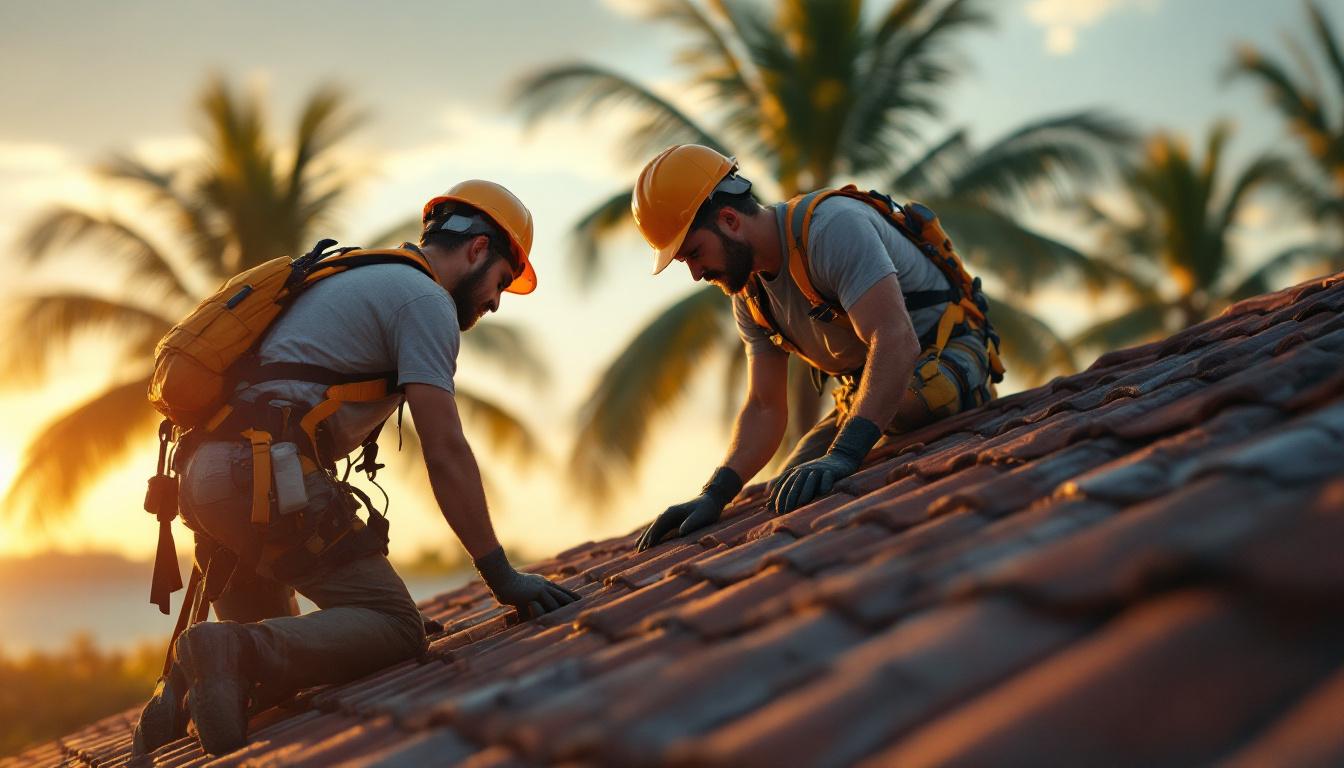
“Florida roofing is the single most misunderstood vertical in home services M&A. Generic brokers treat it like Texas or Georgia roofing, and lose. The Florida deal hinges on three specific things: how you normalize storm revenue, how you document AOB reform adaptation, and whether you have a Qualifying Agent transition plan that doesn’t require you to stay employed for two years post-close.”
TL;DR, the 90-second brief
- Florida roofing M&A is structurally unique in U.S. roofing. Hurricane and tropical storm cycles drive massive revenue spikes; AOB reform (HB 7065 in 2019, SB 76 in 2022) has reshaped insurance-driven replacement work; and PE consolidators including Latite Roofing (Sun Capital portfolio), Storm Smart Roofing, Vertex Florida operations, and 10+ regional rollups are actively deploying capital across South Florida, Tampa Bay, Orlando, and Jacksonville.
- Zero Florida state income tax means real after-tax premium. A Florida roofing seller keeps an additional $300K-$1.3M of after-tax proceeds versus a California or New York seller on a $3-$10M sale.
- Florida DBPR roofing contractor licensing is the deal-killer most owners underestimate. Certified Roofing Contractor (CCC) and Class C Roofing Contractor licenses under Florida Statutes Chapter 489 are held by a Qualifying Agent who is a person, not the entity. The Florida Building Code (FBC) and FL §489.147 (post-storm permit and inspection requirements) layer on additional regulatory complexity.
- Realistic Florida roofing multiples. Sub-$2M revenue residential storm-restoration: 0.4-0.8x revenue or 2.5-4x SDE (storm-cycle volatility compresses multiples). $1M-$3M EBITDA platforms with strong recurring service mix: 5-7x EBITDA. $3M+ EBITDA with diversified revenue and metro density: 6-9x EBITDA.
- Florida-specific deal-killers. AOB litigation history, post-storm permit and inspection compliance under FL §489.147, “chasing storms” out-of-state operator stigma, contractor unlicensed-practice complaints, and Florida Building Code update cycles (Miami-Dade Approved/NOA requirements). We’re a buy-side partner working with 200+ buyers, including PE-backed Florida roofing consolidators, and they pay us when a deal closes, not you.
Key Takeaways
- Florida roofing PE rollup activity includes specialized players: Latite Roofing (Sun Capital portfolio, highly active South Florida), Storm Smart Roofing, Vertex Florida operations, CentiMark Florida, Tecta America Florida, plus 10+ regional rollups deploying capital in 2026.
- DBPR Certified Roofing Contractor (CCC) license under Florida Statutes Chapter 489 is held by a Qualifying Agent personally, not the entity. FL §489.147 post-storm permit and inspection requirements add specific compliance overhead.
- Zero Florida state income tax means $300K-$1.3M of additional after-tax proceeds on a $3-$10M sale versus a California or New York seller.
- Florida roofing multiples by size: sub-$2M revenue storm-restoration = 0.4-0.8x revenue / 2.5-4x SDE; $1M-$3M EBITDA = 5-7x EBITDA (storm-cycle adjusted); $3M+ EBITDA platforms = 6-9x EBITDA.
- AOB reform (HB 7065 in 2019, SB 76 in 2022) has fundamentally reshaped Florida roofing revenue mix, buyers will dissect pre-reform versus post-reform revenue trajectory carefully.
- Miami-Dade Approved (NOA) and Florida Building Code (FBC) High-Velocity Hurricane Zone (HVHZ) compliance documentation is a specific Florida diligence requirement.
Why Florida roofing M&A is structurally unique
For 2026 OR roofing sale playbook (CCB) with 4x-5.5x SDE / 5x-8x EBITDA, CCB licensing, moss / moisture re-roof cycle, see our reference guide.
For 2026 sell your restoration business in Florida with 2.3x-8x range, TPA panel placement, hurricane-season demand, and named PE buyers, see our reference guide.
For 2026 FL fire protection sale playbook with 3x-12x EBITDA multiples, NICET licensing math, and NFPA recurring-inspection premium, see our reference guide.
For 2026 MI storm-restoration roofing sale playbook with 4x-8x EBITDA multiples, storm-restoration premium, and named PE buyers, see our reference guide.
For 2026 buyer-paid garage door sale playbook with 5x-7x EBITDA multiples and a buyer-paid sale process ($0 to seller), see our guide.
For the founder quick-answer on how much a roofing company is worth in 2026 (3x-7x EBITDA by mix) with PE buyer references, see our reference.
For 2026 garage door multiples and premium drivers with 2.5x-7x multiples by operator tier and what drives top of range, see our reference guide.
Multiple at a Glance · 2026
Florida Roofing Business Sale Multiples · 2026
By operator scale and DBPR/AOB compliance.
Source: CT Acquisitions analysis of Florida roofing M&A. Sun Belt thesis + post-AOB-reform stability drive active PE platform demand. DBPR-clean licensing required for transfer.
For 2026 roofing multiples by operator tier and PE consolidator data, see our roofing business valuation guide.
Florida roofing M&A is structurally unique in U.S. roofing because of the convergence of hurricane revenue cycles, AOB reform, complex regulatory framework, and active PE consolidation. The structural drivers: 22+ million population (third-largest state), the highest hurricane and tropical storm exposure of any U.S. state, an aging housing stock with concentrated roof replacement cycles, year-round building activity (no winter shutdowns), and Florida Building Code requirements that drive scheduled re-roof activity even in non-storm years. Between 2021 and 2026, an estimated $1.5-2.5B of PE capital was deployed specifically into Florida roofing platforms and add-ons.
The active PE-backed Florida roofing consolidators. Latite Roofing, a Sun Capital Partners portfolio company, has been one of the most active South Florida roofing acquirers, building density across Miami-Dade, Broward, and Palm Beach counties through bolt-ons. Storm Smart Roofing has been an active Florida-focused consolidator. Vertex Roofing has Florida operations and has expanded through acquisitions. CentiMark and Tecta America (national commercial roofing platforms) have Florida operations and acquire commercial-focused Florida roofers. Plus 10+ regional Florida-focused rollups. From a Florida roofing seller’s perspective, this means competitive bidding is realistic for $1M+ EBITDA platforms in the major metros.
What this means for Florida roofing sellers. If you’re running a $1M+ EBITDA Florida roofing business with a balanced revenue mix (residential re-roof, commercial maintenance, post-storm restoration), you should expect 4-8 indications of interest from PE-backed consolidators with the right outreach. If you’re running a primarily AOB-driven storm-chaser model with limited post-reform adaptation, the buyer pool has compressed. If you’re a sub-$1M SDE operation, the SBA buyer pool exists but is smaller than for HVAC or plumbing because Florida roofing’s storm-cycle volatility makes SBA underwriting harder.
Florida DBPR roofing contractor licensing and FL §489.147 post-storm rules
Florida roofing contractor licensing is administered by the Florida Department of Business and Professional Regulation (DBPR), Construction Industry Licensing Board (CILB), under Florida Statutes Chapter 489 (Construction Contracting). The relevant license types for roofing are: Certified Roofing Contractor (CCC, statewide); Class C Roofing Contractor (CCC at the local level depending on jurisdiction); and the broader Certified Building Contractor (CBC, which can include roofing as part of building scope). Each license is held by a Qualifying Agent who must be an individual person.
What this means in a sale. When you sell a roofing business in Florida, the DBPR license does not automatically transfer with the business. The Qualifying Agent’s license is personal. If you’re selling the entity in a stock sale and the Qualifying Agent is the seller (which is the most common scenario for owner-operator Florida roofing shops), the buyer faces three choices: (1) the buyer designates an existing employee or new hire who already holds a CCC to serve as Qualifying Agent post-close; (2) the buyer’s designated qualifying party sits for and passes the DBPR exam before close; or (3) the seller agrees to remain employed as Qualifying Agent for a transition period of 6-24 months.
FL §489.147: post-storm permit and inspection requirements. Florida Statute §489.147 imposes specific requirements on contractors performing roofing work following a state of emergency declaration: written contracts with specific disclosures, restrictions on advertising in disaster-affected areas, prohibitions on certain payment practices, and required disclosures about insurance interactions. Buyer-side diligence on Florida roofing acquisitions will include review of: any §489.147 violations or complaints; compliance documentation for post-storm projects; advertising practices in disaster-affected counties; and contract templates used in post-storm work.
Florida Building Code (FBC) and Miami-Dade NOA / HVHZ. The Florida Building Code (FBC) governs construction quality statewide. Miami-Dade County and Broward County operate within the High-Velocity Hurricane Zone (HVHZ), which has stricter requirements than the rest of the state. Roofing products and assemblies in HVHZ must have Miami-Dade Notice of Acceptance (NOA) or Florida Product Approval. Buyer-side diligence will include verification that all installations in prior 12-24 months used appropriately approved products, with documentation. Non-compliant installations create real warranty exposure that is a re-trade risk.
AOB reform: how HB 7065 (2019) and SB 76 (2022) reshaped Florida roofing
Florida’s Assignment of Benefits (AOB) reforms are the single most consequential regulatory change affecting Florida roofing M&A in the last decade. Pre-reform, Florida roofing contractors routinely took assignment of homeowners’ insurance benefits and pursued insurance carriers directly for storm-damage replacement work. The combination of one-way attorney’s fee provisions in Florida property insurance disputes and aggressive AOB practices led to a litigation explosion that reshaped Florida property insurance markets and roofing contractor business models.
HB 7065 (effective July 2019). Florida HB 7065 imposed new requirements on AOB agreements: written disclosures, rights of rescission, attorney’s fee provisions modified to reduce one-way fee shifting, and limitations on how AOB agreements can be transferred. The reform reduced the volume of speculative AOB litigation but did not fully eliminate AOB-driven contractor business models. Florida roofing contractors that had built their entire revenue model around AOB faced significant disruption in 2019-2021.
SB 76 (effective July 2021) and subsequent reforms. Florida SB 76 (and subsequent legislative actions including the December 2022 special-session reforms) further restricted AOB practices in property insurance claims. Specifically, the 2022 reforms ended the AOB-related one-way attorney’s fee provisions and substantially restructured Florida property insurance litigation. The cumulative effect: AOB-driven contractor business models in Florida roofing have largely become unviable post-2022. Florida roofers that have not adapted by building direct-pay residential re-roof, commercial maintenance, and traditional insurance-claims revenue (without AOB) have seen revenue compression and profitability stress.
How buyers diligence AOB exposure in Florida roofing acquisitions. Buyers will request: percentage of historical revenue (year by year, 5-7 year window) that came through AOB arrangements; current AOB-related revenue as a percentage of total; AOB-related litigation history (lawsuits filed by the contractor on assigned claims); customer complaints filed with DBPR or FDACS related to AOB practices; revenue trajectory post-reform showing adaptation; and current contracts and business model. Heavy AOB exposure is a real diligence flag, some PE buyers will refuse to acquire Florida roofers with substantial pre-reform AOB business until they can confirm the post-reform business model is sustainable.
Who actually buys Florida roofing businesses in 2026: the five archetypes
The Florida roofing buyer pool divides into five archetypes, each with materially different motivations, capital sources, multiples, and deal structures. Knowing which archetype fits your specific business size, service mix, AOB history, and metro is the single highest-leverage positioning decision. A $400K SDE residential roofing business in Naples marketed as if Latite Roofing would buy it wastes 9 months. A $2M EBITDA Miami commercial roofing business marketed to SBA individuals leaves $3-5M on the table.
Archetype 1: PE-backed Florida roofing consolidators. Latite Roofing (Sun Capital Partners portfolio company, highly active South Florida), Storm Smart Roofing, Vertex Florida operations, CentiMark Florida, Tecta America Florida, and 10+ regional Florida consolidators. Typical target: $1M-$10M EBITDA with diversified revenue (residential re-roof, commercial maintenance, post-storm restoration without heavy AOB dependence), crew headcount 10-40, and metro fit. Multiples: 5-8x EBITDA on platform-eligible deals, 4.5-6.5x on bolt-ons. Heavy preference for cash + rollover equity (15-30%) + earnout. Close timeline: 90-150 days.
Archetype 2: Search funders pursuing Florida roofing. Individual MBA-backed searchers (often from regional MBA programs or relocating to Florida) and deal-by-deal investors targeting Florida residential or light commercial roofing. Typical target: $750K-$3M EBITDA with documented systems, recurring revenue (commercial maintenance contracts especially), and a real second-tier team. Multiples: 4-6x EBITDA. Often careful about storm-cycle exposure. Close timeline: 120-180 days.
Archetype 3: SBA 7(a)-financed individuals. First-time owner-operators using the SBA 7(a) program. Smaller pool in Florida roofing than in HVAC or plumbing because storm-cycle volatility makes SBA underwriting harder. Typical target: $200K-$700K SDE residential roofing with stable (non-storm-dependent) revenue, transferable license, and an owner-replaceable role. Multiples: 2.5-4x SDE. Heavy reliance on seller training, seller note (20-30% of purchase). Close timeline: 60-120 days but with 20-30% SBA loan denial risk for storm-heavy revenue profiles.
Archetype 4: Family offices with Sun Belt home services theses. Florida-based and out-of-state multi-generational family money pursuing direct ownership. Many family offices have specific Florida or Sun Belt theses. Typical target: $1M-$5M EBITDA with stable revenue mix. Multiples: 4.5-6.5x EBITDA. Patient on structure, willing to roll seller equity 25-40%. Close timeline: 90-180 days.
Archetype 5: Strategic / regional Florida roofing operators. Local or regional Florida roofing operators expanding through tuck-in acquisitions, often funded by SBA or local Florida bank debt. Typical target: any size where route density, customer base overlap, or crew headcount creates synergies. Multiples: 3-6x SDE/EBITDA depending on synergy depth. The right Florida strategic with metro density synergies pays a premium. Close timeline: 60-120 days.
| Florida roofing buyer archetype | Typical multiple | Deal structure norms | Close timeline |
|---|---|---|---|
| PE rollup / platform (Latite, Storm Smart, Vertex) | 5-8x EBITDA (platform), 4.5-6.5x (bolt-on) | Cash + 15-30% rollover + earnout | 90-150 days |
| Search funder | 4-6x EBITDA | Senior debt + 10-20% seller note + earnout | 120-180 days |
| Independent sponsor | 4-5.5x EBITDA | Deal-by-deal capital + rollover equity | 120-180 days |
| SBA 7(a) individual | 2.5-4x SDE | 10% buyer equity, 20-30% seller note, training | 60-120 days |
| Family office (Sun Belt thesis) | 4.5-6.5x EBITDA | Cash-heavy, 25-40% rollover, longer hold | 90-180 days |
| Strategic / Florida regional | 3-6x (high variance) | Cash + earnout for customer retention | 60-120 days |
Realistic Florida roofing multiples by size: what 2026 deal data actually shows
Florida roofing multiples run 0.5-1.0x EBITDA below comparable Florida HVAC multiples for similar-size businesses. The discount reflects storm-cycle volatility, AOB-reform-driven revenue uncertainty, and lower recurring revenue characteristics. Within Florida roofing, however, the same buyer-pool dynamics apply: size, service mix (residential re-roof vs commercial maintenance vs storm restoration), technology platform, and metro density drive multiple variance.
Sub-$1M revenue Florida roofing: 0.3-0.6x revenue / 2-3.5x SDE typical. Micro-shops sold primarily through BizBuySell or Florida broker listings. Almost always owner-dependent. Buyer pool: SBA individuals primarily, smaller pool than HVAC. Multiples compress further if business is storm-heavy or has historical AOB litigation.
$1M-$3M revenue Florida roofing: 0.4-0.8x revenue / 2.5-4x SDE typical. Core SBA buyer territory in Florida roofing. Multiples improve materially with: (a) recurring commercial maintenance contracts; (b) tech-enabled estimating and project management (Roofr, JobNimbus, Acculynx); (c) documented systems and operations manager; (d) commercial revenue at 30%+ of mix; (e) presence in Miami-Dade/Broward/Palm Beach, Tampa Bay, Orlando, or Jacksonville; (f) post-AOB-reform revenue stability.
$3M-$10M revenue / $500K-$2M EBITDA: 4-6x EBITDA typical. Wider buyer pool: search funders, independent sponsors, regional PE add-ons, Florida strategic interest. Multiples accelerate with diversified revenue mix, low customer concentration, tenure of second-tier management, and clean post-reform revenue trajectory.
$10M-$30M revenue / $2M-$5M EBITDA: 5-7.5x EBITDA typical. Platform territory for PE rollups. Latite Roofing, Storm Smart Roofing, Vertex Florida, CentiMark Florida, Tecta America Florida, family offices, and Florida strategics compete. Multiples premium for: 30%+ commercial maintenance revenue; technology platform implemented; crew headcount above 20; metro density advantage.
$30M+ revenue / $5M+ EBITDA: 6-9x EBITDA typical. Platform-of-the-platform deals. Florida roofing platforms at this size typically draw competitive bids from at least 3-6 PE buyers, with strategic premium for proven Florida operations.
| Florida roofing business size | Revenue multiple range | SDE/EBITDA multiple range | Dominant buyer pool |
|---|---|---|---|
| Sub-$1M revenue | 0.3-0.6x revenue | 2-3.5x SDE | SBA individual (storm-heavy harder) |
| $1M-$3M revenue | 0.4-0.8x revenue | 2.5-4x SDE | SBA + occasional search funder |
| $3M-$10M / $500K-$2M EBITDA | 0.6-1.0x revenue | 4-6x EBITDA | Search, indie sponsor, PE add-on |
| $10M-$30M / $2M-$5M EBITDA | 0.7-1.2x revenue | 5-7.5x EBITDA | PE rollup, family office, strategic |
| $30M+ / $5M+ EBITDA | 0.9-1.4x revenue | 6-9x EBITDA | PE platform-of-platform, strategic |
Service mix in Florida roofing: residential re-roof, commercial maintenance, post-storm restoration
Florida roofing revenue mix is the single largest determinant of multiple within size cohorts. A Florida roofing business with 60% commercial maintenance revenue trades at a 1-2x EBITDA premium versus an otherwise identical shop with 90% post-storm residential restoration. Buyers value recurring, predictable, low-volatility revenue dramatically more than episodic, high-variance, regulatorily-exposed storm work.
Residential re-roof: the moderate-multiple core. Standard residential re-roof work (full roof replacement on aging or storm-damaged residential properties, typically funded by homeowner direct pay or traditional insurance claims) is the moderate-multiple core of Florida roofing. Predictable seasonal demand, established product types (asphalt shingle, tile, metal), well-understood crew productivity. Multiples in this segment typically run at the median of the Florida roofing range.
Commercial maintenance and re-roof: the premium-multiple segment. Commercial roofing maintenance contracts (multi-year service agreements with property managers, REITs, hospitality operators, healthcare systems, schools, government) are the highest-multiple segment of Florida roofing. CentiMark and Tecta America specifically target this segment. Recurring contracted revenue, multi-year visibility, professional buyer relationships, and lower volatility than residential. Multiples in this segment typically run at the high end of the Florida roofing range, often 1-2x EBITDA above residential-only operators.
Post-storm restoration: the volatile-multiple segment. Post-storm residential restoration work is high-revenue when hurricanes hit but episodic and exposed to AOB-reform regulatory uncertainty. Buyers carefully normalize revenue from storm-heavy years and apply discounts for regulatory exposure. Pure storm-chaser operators (those who follow major storm events with out-of-state crew deployment) face additional stigma in M&A, the buyer worry is that the business doesn’t have stable Florida roots and will collapse when no major storm hits. Multiples in this segment typically run at the low end of the Florida roofing range.
How to reposition mix in 18-24 months pre-sale. If you’re heavy in storm restoration, the playbook is to aggressively grow commercial maintenance contracts (target 30-50% of revenue), build out direct-pay residential re-roof (rather than AOB-driven insurance claims), and demonstrate post-AOB-reform revenue stability through 24+ consecutive months of clean data. Owners who execute this shift see their pre-sale multiple improve by 1-2x EBITDA, on $1M EBITDA, that’s $1-2M of additional sale price.
What Florida roofing buyers diligence: the checklist that determines your final price
Florida roofing diligence at $500K SDE looks different from diligence at $3M EBITDA, but the underlying focus areas are consistent. Buyers want to verify earnings (SDE / EBITDA quality), validate revenue mix and customer concentration, confirm crew retention and project productivity, assess vehicle and equipment condition, normalize storm revenue, and identify DBPR licensing, FBC compliance, AOB exposure, and warranty risk. Florida-specific overlays apply throughout.
Earnings quality, add-back validation, and storm normalization. 5-7 years of monthly P&Ls (longer than typical because of storm normalization needs). Tax returns matching financials. Documented add-backs. CPA-prepared annual financial statements. Bank reconciliations. AR aging and bad debt history. Project cost reports. Florida-specific: explicit storm-event revenue identification by month, normalized run-rate calculations, and AOB-revenue percentage by year (pre and post-reform).
Revenue mix, customer concentration, and AOB history. Residential re-roof vs commercial maintenance vs commercial re-roof vs post-storm restoration breakdown by year. Top 10 customers as percentage of revenue (low-concentration commercial portfolios are highly valued). Florida-specific: AOB-driven revenue percentage by year (showing trajectory from pre-reform to post-reform); list of AOB-related lawsuits filed by the contractor against insurance carriers; list of any DBPR or FDACS complaints; FL §489.147 compliance documentation for post-storm work.
Crew headcount, productivity, retention, and DBPR licensing. Crew roster with tenure, comp, certifications, W-2 vs 1099 status, I-9 documentation. Crew retention rate over 24 months. Productivity metrics (squares per crew per day, revenue per crew per month). Florida-specific: DBPR Qualifying Agent and registered crew documentation, confirmation no DBPR enforcement actions or complaints pending.
Equipment, warranty, FBC compliance, and Florida regulatory exposure. Vehicle and equipment list (lifts, conveyors, dump trailers, magnet rollers). Outstanding warranty exposure on installations from prior 5 years (longer warranty tail in roofing than HVAC). Inventory levels. Real estate ownership and lease terms. Florida-specific: Florida Building Code (FBC) compliance documentation, Miami-Dade NOA / Florida Product Approval documentation for HVHZ installations, post-storm permit compliance under FL §489.147, and any pending or historical local code complaints.
License, permits, insurance, AOB litigation, and Florida regulatory. DBPR Certified Roofing Contractor (CCC) license documentation. Local municipal contractor registration where applicable. General liability and Florida workers’ comp coverage (often $1M+ for roofing). OSHA history (roofing has elevated incident rates). Past lawsuits or claims, especially AOB litigation history and any §489.147 violations. Surety bond status if applicable for commercial work.
Florida roofing sale process timeline: what actually happens month by month
Florida roofing sale processes vary by buyer pool but cluster around 7-10 months from launch to close for sub-$1M EBITDA deals and 10-13 months for $1M+ EBITDA platform deals. Florida roofing timelines run 1-2 months longer than Florida HVAC because of additional regulatory diligence (storm normalization, AOB exposure review, FBC compliance, FL §489.147 review) and more complex underwriting around revenue volatility.
The vertical-specific prep sequence is covered on our roofing exit-planning walkthrough.
The transactional action page for this vertical is sell-side page for roofing owners.
Months 1-2: positioning and outreach. Build the CIM (15-25 pages for sub-$1M; 35-60 pages for $1M+ EBITDA), with explicit storm normalization and AOB-reform adaptation analysis. Identify target buyer archetype mix. Reach out to PE-backed Florida roofing consolidators (Latite Roofing, Storm Smart Roofing, Vertex Florida, CentiMark Florida, Tecta America Florida), Florida-focused search funders, family offices, SBA buyers, and strategic regional Florida operators. Sign NDAs. Target 6-12 serious initial conversations.
Months 2-5: management meetings and indications of interest. Take 4-7 buyer meetings. PE-backed consolidators send 2-3 person teams to walk operations, ride along with crews, review revenue mix data including storm normalization analysis. Search funders typically come solo. Receive 2-4 IOIs with non-binding price ranges. Negotiate to a single LOI.
Months 5-9: LOI, diligence, financing, and DBPR planning. Sign LOI with 60-120 day exclusivity. Buyer-side diligence: financial QoE for $1M+ EBITDA deals ($40-80K cost) including storm normalization and AOB exposure review; CPA review for sub-$1M; operational walkthrough; crew interviews; customer interviews on top accounts; project portfolio review; technology audit; DBPR license transfer review; FBC and §489.147 compliance review; environmental review. Buyer financing: PE platforms have it lined up; SBA buyers process loan application (60-120 days, longer for storm-heavy revenue profiles).
Months 9-11: definitive agreement and close. Negotiate purchase agreement: working capital target, indemnification caps (often higher in Florida roofing because of warranty tail and AOB litigation potential), R&W insurance for $1M+ EBITDA deals, non-compete (typically 3-5 years and reasonable Florida geography), seller employment agreement if DBPR licensing requires. Final walkthrough. Employee notification. Customer notification per contract requirements. Escrow funding. Signing. DBPR change-of-control filings.
Months 11+: transition and DBPR compliance. Post-close transition typically 90-180 days for $500K SDE deals, 90-180 days for platform deals. Seller often available by phone for an additional 6-12 months. DBPR Qualifying Agent transition monitoring. Earnout periods 12-36 months post-close depending on structure, earnouts often longer in Florida roofing because of storm-cycle revenue uncertainty.
Common mistakes Florida roofing sellers make (and how to avoid them)
Mistake 1: marketing on hurricane-year peak revenue. Marketing your Florida roofing business off a hurricane-year peak is the single fastest way to get re-traded down hard in diligence. Sophisticated buyers normalize storm revenue using 5-7 years of data and won’t pay for non-recurring spikes. Best practice: present normalized run-rate alongside gross figures from day one. Buyers reward sophistication.
Mistake 2: pretending AOB reform didn’t happen. Buyers know HB 7065 (2019) and SB 76 (2022) reshaped Florida roofing economics. Hiding pre-reform AOB exposure or hoping buyers won’t notice is futile. Document the trajectory honestly: pre-reform AOB percentage, post-reform adaptation, current direct-pay residential and commercial maintenance traction. Roofers that show clear post-reform business model adaptation trade at premium; those that hide get re-traded.
Mistake 3: failing to address DBPR Qualifying Agent licensure before going to market. Florida buyers walk from deals when the licensing complications surface mid-diligence. Address this in month one: meet with a Florida contractor licensing attorney, document the CCC transfer pathway, identify whether you (the seller) need to remain employed, and groom a backup CCC licensee from your senior team if possible.
Mistake 4: hiring a generalist business broker who hasn’t closed a Florida roofing deal. Florida roofing M&A is the most specialist niche in U.S. trades M&A. The PE-backed consolidators (Latite Roofing, Storm Smart Roofing, Vertex Florida, CentiMark, Tecta America) have specific buy boxes, AOB-history requirements, and metro priorities. A generalist broker doesn’t know who’s actively buying Florida roofing this quarter or how to package storm-revenue normalization for these buyers.
Mistake 5: under-investing in commercial maintenance contract growth. Commercial maintenance contracts are the highest-multiple revenue in Florida roofing. CentiMark Florida and Tecta America Florida specifically target commercial-maintenance-heavy operators. An 18-month commercial maintenance development campaign that adds 30-50% commercial mix typically returns 1-2x EBITDA in multiple uplift.
Mistake 6: ignoring Florida Building Code and Miami-Dade NOA documentation. Buyers will request FBC compliance documentation for installations in prior 12-24 months and Miami-Dade NOA / Florida Product Approval documentation for HVHZ installations. Non-compliant installations create real warranty exposure that is a re-trade risk. Audit and document compliance 12-18 months before sale.
Mistake 7: not addressing FL §489.147 compliance proactively. Post-storm permit and inspection requirements under FL §489.147, advertising restrictions in disaster-affected areas, and contract disclosure requirements all create specific Florida roofing diligence flags. Document compliance for any post-storm work in prior 4 years, surprises here re-trade deals.
Selling a Florida roofing business? Talk to a buy-side partner first.
We’re a buy-side partner working with 200+ buyers, including PE-backed Florida roofing consolidators (Latite Roofing, the Sun Capital Partners portfolio company highly active in South Florida; Storm Smart Roofing; Vertex Florida operations; CentiMark Florida; Tecta America Florida; and 10+ regional Florida-focused rollups), search funders explicitly pursuing Florida roofing despite the regulatory complexity, family offices with Sun Belt home services theses, and strategic regional Florida operators. The buyers pay us, not you, no contract required. No retainer, no exclusivity, no 12-month engagement, no tail fee. A 15-minute call gets you three things: a real read on what your Florida roofing business is worth in today’s market, a sense of which buyer types fit your specific service mix, AOB history, and metro, and the option to meet one of them. Try our free valuation calculator for a starting-point range first if you prefer.
How to position for the right Florida roofing buyer archetype
Position for PE rollups (Latite Roofing, Storm Smart Roofing, Vertex Florida) when: You have $1M+ EBITDA, diversified revenue mix (residential re-roof + commercial maintenance + storm restoration without heavy AOB dependence), crew headcount 10+, geographic fit (especially South Florida, Tampa Bay, Orlando), normalized hurricane revenue analysis ready, post-AOB-reform revenue trajectory documented, and willingness to roll equity 15-30%. Emphasize: scalability, recurring commercial maintenance, technology platform, crew retention, geographic platform potential.
Position for commercial-focused acquirers (CentiMark Florida, Tecta America Florida) when: You have 50%+ commercial revenue, multi-year commercial maintenance contracts, low residential storm exposure, and crew capability for commercial work (TPO, EPDM, PVC, modified bitumen, metal). These commercial-focused acquirers typically pay competitively for clean commercial books with strong recurring revenue.
Position for search funders when: You have $750K-$2M EBITDA, real second-tier operations team, recurring commercial maintenance revenue, low storm-cycle exposure, and a clean post-AOB-reform business model. Searchers are wary of Florida roofing storm-cycle volatility but interested in stable diversified operators.
Position for SBA individuals when: Your SDE is $200K-$700K, your business has stable (non-storm-dependent) revenue, the DBPR license can transfer cleanly, and you’re willing to provide 90-180 days of seller training plus seller financing. SBA buyer pool is smaller in Florida roofing than HVAC or plumbing because of storm volatility.
Position for family offices and Florida regional strategics when: You have $1M-$5M EBITDA with stable revenue mix, willing to roll meaningful equity, and you value patient capital over maximum near-term cash. Or you’re a regional strategic-fit candidate where a competitor would benefit from acquiring your route or commercial book. Targeted outreach often beats broad auction.
Florida tax planning for roofing exits: where the after-tax math gets favorable
Florida roofing exits are typically structured as asset sales (under $5M EBITDA) and stock sales (more common at platform scale). Asset sales benefit the buyer (depreciation step-up, liability isolation) but expose the seller to dual taxation on the federal side. Florida’s no-state-income-tax advantage applies regardless of structure, capturing the full benefit of capital-gains-favored allocation.
Typical asset allocation in a $3M Florida roofing sale. Tangible assets (vehicles, lifts, equipment, inventory): $300K-$600K, taxed as ordinary income recapture at up to 37% federal (no Florida state add-on). Goodwill: $1.8M-$2.5M, taxed as long-term capital gains at 23.8% federal-only for Florida residents. Non-compete: $50-$150K. Consulting: $50-$200K.
Why asset allocation negotiation matters for Florida roofing sellers. Roofing tends to have higher tangible-asset value than HVAC or plumbing (lifts, fleet, inventory), so allocation strategy carries higher stakes. The buyer wants to push value toward equipment (faster expensing). The seller wants to push value toward goodwill (capital gains). A skilled tax attorney can shift $100-300K of after-tax proceeds in the seller’s favor through allocation negotiation alone.
Warranty reserve and indemnification considerations. Florida roofing has longer warranty tails than HVAC (often 5-10 years on installations). Buyers will typically negotiate warranty reserves in escrow ($50-$300K typical) and indemnification provisions for warranty claims arising post-close. These reserves return to seller as warranty exposure expires, build the reserve schedule into your after-tax planning.
AOB litigation indemnity considerations. If your business has historical AOB litigation, expect buyers to negotiate specific indemnification provisions and possibly a separate escrow holdback for AOB-related claims. The dollar amounts depend on volume and outcome of past AOB litigation. Document everything thoroughly.
When to wait: signals that delaying 12-24 months pays off for Florida roofing sellers
Many Florida roofing owners would benefit financially from waiting 12-24 months before going to market. Florida roofing leverage from preparation is unusually high because storm normalization, AOB-reform adaptation, and revenue mix improvements all compound.
Signal 1: your last full year was a hurricane-driven peak. Marketing off a peak storm year results in re-trade. Wait 12-24 months for a normalized comparison year, or accept TTM EBITDA discount. The exception: if your business is well-diversified with strong commercial maintenance, a recent storm year can showcase capacity.
Signal 2: commercial maintenance revenue is below 30%. Commercial maintenance contracts add 1-2x EBITDA in multiple. An 18-month commercial maintenance development campaign, targeting property managers, REITs, hospitality operators, healthcare systems, routinely shifts mix and adds material multiple uplift.
Signal 3: you have unresolved AOB litigation or DBPR complaints. Resolve open AOB cases and DBPR complaints before going to market. Pending litigation is a real diligence flag. 6-12 months of resolution work often pays for itself many times over in cleaner diligence.
Signal 4: you’re still the only DBPR Qualifying Agent. Groom a senior employee through CCC licensure. 12-18 months of intentional development dramatically widens your buyer pool by removing the seller-employment-required constraint. See also: how to sell a family business in florida without chaos.
Signal 5: you’re still on QuickBooks plus paper estimating. Roofr, JobNimbus, or Acculynx implementation 12-18 months pre-sale typically returns 0.5-1.0x EBITDA in multiple uplift in Florida roofing. Buyers view modern roofing tech stack as proof of operational maturity.
When NOT to wait. Health issues. Co-owner conflict. Personal financial crisis. Industry headwinds (further AOB-related insurance market disruption, building code tightening). PE buyer activity slowing in your specific Florida geography.
Earnouts, rollover equity, and seller financing in Florida roofing deals
Florida roofing deals at $1M+ EBITDA almost always include some combination of earnout, rollover equity, and seller financing. Pure cash deals at platform scale are unusual in Florida roofing because of storm-cycle and AOB-reform uncertainty. PE rollups (Latite Roofing, Storm Smart Roofing, Vertex Florida, CentiMark Florida, Tecta America Florida) structure deals with cash + rollover + earnout. Earnout components in Florida roofing tend to be larger and longer than in HVAC because buyers want protection against storm-revenue assumption failures.
Typical Florida roofing PE rollup deal structure at $2M EBITDA / $12M EV (6x). Cash at close: $7-9M (58-75%). Rollover equity: $2-3M (17-25%). Earnout: $1.5-3M (12-25%). Earnout typically extends 24-36 months (longer than HVAC’s typical 12-24) and includes EBITDA milestones, customer retention thresholds, commercial maintenance contract retention, and Florida-specific revenue normalization checkpoints. Earnout realization rates in Florida roofing have historically run 50-70% of full potential.
Rollover equity in Florida roofing platform exits. When you roll 20-30% of equity into a Florida roofing platform (Latite Roofing under Sun Capital is a notable example), you become a minority equity holder. The platform exits in 3-5 years, sometimes longer in Florida roofing because of storm-cycle timing considerations. The rollover often performs especially well when the platform builds commercial maintenance density that wasn’t present at original sale.
SBA seller-financing for sub-$1M Florida roofing. SBA 7(a) loans capped at $5M. Buyer equity: 10% minimum. Seller note: 25-40% of purchase price (typically higher than HVAC because of storm-cycle volatility making SBA lenders more conservative), often subordinated, on extended standby. Storm-heavy revenue profiles see additional SBA underwriting scrutiny.
Working capital, warranty reserves, and AOB indemnity escrow. Florida roofing deals routinely include three escrow components: standard working capital adjustment ($150-400K typical), warranty reserve ($50-300K for 5-10 year warranty tail), and AOB-related litigation indemnity holdback if pre-reform AOB activity was material. Negotiate all three during LOI. Working capital releases at 90-180 days post-close; warranty reserve releases as warranty exposure expires; AOB indemnity holdback typically releases 24-36 months post-close.
Curious what your business is actually worth?
A 15-minute confidential call gives you a real valuation range and tells you which buyers would compete for your business. No cost, no obligation, no pressure to sell.
Conclusion
Selling a roofing business in Florida in 2026 is a real opportunity for owners with diversified revenue, clean post-AOB-reform business models, and proper preparation, but it’s the most complex state-vertical M&A market in U.S. home services. Multiples and outcomes diverge wildly based on size, service mix (residential re-roof vs commercial maintenance vs post-storm restoration), AOB history and post-reform adaptation, DBPR Qualifying Agent transfer pathway, FBC compliance, technology platform, metro, and which buyer archetype you target. Owners who succeed are the ones who address Florida-specific dynamics head-on: PE-backed consolidators paying 5-8x EBITDA on platforms, search funders paying 4-6x for $750K-$2M EBITDA targets, SBA buyers paying 2.5-4x SDE on sub-$1M businesses (where the storm profile permits), and strategic competitors paying premium multiples for metro density. Get your books clean 18-24 months ahead with explicit storm normalization and AOB-reform adaptation analysis. Grow commercial maintenance contracts aggressively. Implement Roofr, JobNimbus, or Acculynx. Reduce owner dependency. Address DBPR Qualifying Agent licensure proactively. Maintain rigorous FL §489.147 and FBC compliance documentation. Position for the right buyer archetype rather than running a generic auction. The owners who do this work see 30-50% better after-tax outcomes than the ones who go to market unprepared. And if you want to talk to someone who already knows the Florida roofing buyers personally instead of running an auction, we’re a buy-side partner, the buyers pay us, not you, no contract required.

About the Author
Christoph Totter is the founder of CT Acquisitions, a buy-side partner headquartered in Sheridan, Wyoming. We work directly with 200+ buyers, search funders, family offices, lower middle-market PE, and strategic consolidators, including direct mandates with the largest consolidators that other intermediaries cannot access. The buyers pay us when a deal closes, not the seller. No retainer, no exclusivity, no contract until close. Connect on LinkedIn · Get in touch
Frequently Asked Questions
What multiple should I expect when selling my Florida roofing business in 2026?
Multiples vary dramatically by size, service mix, and AOB history. Sub-$2M revenue residential storm-restoration: 0.4-0.8x revenue or 2.5-4x SDE. $1M-$3M EBITDA platforms with diversified revenue: 5-7x EBITDA from PE rollups. $3M+ EBITDA platforms with strong commercial maintenance mix: 6-9x EBITDA. Commercial maintenance contracts add a 1-2x EBITDA premium versus residential-storm-only operators.
Who are the most active PE buyers of Florida roofing businesses right now?
Latite Roofing (Sun Capital Partners portfolio company, highly active in South Florida), Storm Smart Roofing, Vertex Florida operations, CentiMark Florida, Tecta America Florida, plus 10+ regional Florida-focused rollups. The PE rollup activity in Florida roofing is concentrated in South Florida and growing in Tampa Bay and Orlando.
How does Florida DBPR roofing license transfer work in a sale?
Under Florida Statutes Chapter 489, the Certified Roofing Contractor (CCC) license is held by a Qualifying Agent who is an individual person, not the business entity. The license does not transfer with the business. Buyers must either designate an existing employee as Qualifying Agent, pass the DBPR exam themselves, or have the seller remain employed for a transition period of 6-24 months.
How did Florida AOB reform (HB 7065 and SB 76) affect roofing business valuations?
Materially. Pre-reform, many Florida roofing contractors had significant revenue from Assignment of Benefits arrangements with insurers. HB 7065 (2019) imposed disclosure and rescission requirements; SB 76 (2022) and subsequent reforms restricted AOB practices and ended one-way attorney’s fee shifting in property insurance disputes. AOB-driven contractor business models have largely become unviable. Roofers that have not adapted face material valuation discounts; roofers with diversified post-reform revenue trade at premium.
How do hurricane and tropical storm cycles affect my Florida roofing sale?
Sophisticated buyers normalize storm revenue by removing catastrophic-event months from run-rate calculations. They typically request 5-7 years of monthly data and back out hurricane-event peaks. Shops marketing off a hurricane-year peak get re-traded down hard. Best practice: present normalized run-rate alongside gross figures and emphasize commercial maintenance and direct-pay residential re-roof revenue that doesn’t depend on storm cycles.
What is FL §489.147 and why does it matter in Florida roofing M&A?
Florida Statute §489.147 imposes specific requirements on roofing contractors performing work after a state of emergency declaration: written contract disclosures, advertising restrictions in disaster-affected areas, prohibitions on certain payment practices, and required disclosures about insurance interactions. Buyers will request §489.147 compliance documentation for post-storm projects and review for any violations or complaints.
What is Miami-Dade NOA and why does it matter in Florida roofing diligence?
Miami-Dade Notice of Acceptance (NOA) is the product approval system in the High-Velocity Hurricane Zone (HVHZ) covering Miami-Dade and Broward counties. Roofing products and assemblies installed in HVHZ must have current NOA or Florida Product Approval. Buyers will verify all installations in prior 12-24 months used appropriately approved products. Non-compliant installations create real warranty exposure that is a re-trade risk.
Which Florida metro is best for selling a roofing business?
South Florida (Miami-Dade, Broward, Palm Beach) has the deepest PE buyer pool with Latite Roofing especially active. Tampa Bay has growing PE interest. Orlando is hot-growth. Jacksonville has steady commercial maintenance opportunities. Florida secondary metros (Pensacola, Tallahassee, Naples-Fort Myers, Ocala) trade at modest discounts.
How does no Florida state income tax help my roofing sale outcome?
Federal long-term capital gains plus NIIT total 23.8% on goodwill. A California seller pays an additional 9.3-13.3%; a New York City resident pays 10.9-14.7%. A Florida seller pays nothing additional at the state level. On a $5M roofing sale with $4M of goodwill, a Florida seller keeps approximately $400K more after-tax than an otherwise identical California seller.
How long does it take to sell a Florida roofing business?
7-10 months from launch to close for sub-$1M EBITDA SBA-buyer deals; 10-13 months for $1M+ EBITDA platform deals with PE rollups, search funders, or family offices. Florida roofing timelines run 1-2 months longer than Florida HVAC because of storm normalization, AOB exposure review, FBC compliance, and FL §489.147 review. Add 12-24 months on the front for proper preparation.
Should I sell now or wait for a major hurricane to boost revenue?
Generally no. Sophisticated buyers normalize storm revenue and won’t pay for non-recurring spikes. Marketing off a peak storm year often results in re-trade in diligence. The exception: if your business has clean diversification (commercial maintenance, direct-pay residential), a recent storm year can showcase capacity and execution, but the underwriting will still focus on normalized run-rate. Better to grow recurring revenue than to time storm cycles.
Should I sell to a national commercial roofing platform or a Florida-focused residential consolidator?
Depends on your service mix. If you’re heavy in commercial maintenance, CentiMark Florida and Tecta America Florida are the natural buyers and pay competitively for commercial-focused operations. If you’re heavy in residential re-roof, Latite Roofing, Storm Smart Roofing, and Vertex Florida are the natural buyers. If you’re balanced, run multiple in parallel to maintain leverage and let the buyer competition determine the best fit.
How is CT Acquisitions different from a sell-side broker or M&A advisor?
We’re a buy-side partner, not a sell-side broker. Sell-side brokers represent you and charge you 8-12% of the deal (often $300K-$1M+) plus monthly retainers, run a 9-12 month auction process, and require 12-month exclusivity. We work directly with 200+ buyers, including PE-backed Florida roofing consolidators (Latite Roofing, Storm Smart Roofing, Vertex Florida, CentiMark Florida, Tecta America Florida, and 10+ regional Florida-focused rollups), search funders explicitly pursuing Florida roofing, family offices with Sun Belt mandates, and strategic regional Florida operators, who pay us when a deal closes. You pay nothing. No retainer, no exclusivity, no contract until a buyer is at the closing table. We move faster (60-150 days from intro to close) because we already know who the right Florida roofing buyer is rather than running an auction to find one.
Related Guide: How to Sell an HVAC Business in Florida, DBPR licensing, hurricane revenue patterns, and active PE buyers in Florida HVAC.
Related Guide: Most Active PE Platforms in 2026, Which PE consolidators are deploying capital and where.
Related Guide: SDE Add-Backs Explained for Small Business Sellers, Which add-backs roofing buyers will accept, and which they’ll reject.
Related Guide: Business Sale Process: Step-by-Step Guide, From preparation to close, what actually happens.
Related Guide: What Is Your Business Worth in 2026?, Buyer-pool data and multiples by industry, size, and geography.
Related reading: How to sell a roofing company to a strategic buyer, a deeper look at this topic for owners and buyers thinking through the same questions.
Related reading: How to sell roofing business, a deeper look at this topic for owners and buyers thinking through the same questions.
Related reading: Is selling roofs worth it get expert insights, a deeper look at this topic for owners and buyers thinking through the same questions.
Related reading: Roofing company valuation guide, a deeper look at this topic for owners and buyers thinking through the same questions.
Want a Specific Read on Your Business?
15 minutes, confidential, no contract, no cost. You leave with a read on your local buyer market and a likely valuation range.
Owners weighing DIY versus full-service representation should read our broker fee benchmark.
The prep sequence sits inside a broader owner playbook covered on our the pre-sale runway checklist.