

We write for executives who need speed with structure. As 2025 wraps and teams plan for 2026, quick access to funds matters. But structure matters more. We focus on moves that compress the diligence cycle without cutting corners that scare investors or lenders.
This short guide outlines what a strong outcome looks like: resilient growth, not just more cash. We show the right way to finance expansion, acquisitions, and technology investment while protecting control where it counts.
Practical sequence. Strategy first, then the debt/equity mix, then materials, then higher-probability channels beyond the usual playbook. We ground recommendations in 2025 realities: rate sensitivity, selective funds, and buyers demanding cleaner information.
Expect clear decision points that move timelines: readiness, terms, documentation, and partner outreach. We cut through noise so you can act fast and build durable results.
Key Takeaways
- Speed is vital, but structure reduces downstream risk.
- Compress diligence; don’t compromise investor confidence.
- Define success as resilient growth, not just more cash.
- Sequence matters: strategy, mix, materials, channels.
- Align fundraising to 2025 market realities and timelines.
Set Your Capital Strategy for 2025 Growth and Resilience
Every dollar should have a job: link funding to specific, measurable business outcomes before you solicit partners.

Define the funding purpose tied to measurable business goals
Decide whether the need is acquisition firepower, working capital, product rollout, or technology modernization. Tie each use to quantifiable metrics—revenue runway, EBITDA uplift, or customer acquisition cost improvements.
Gauge readiness with liquidity, risk tolerance, and operational stability
Use a brutal checklist: liquidity cushion, cash conversion cycle, customer concentration, and margin stability. Stress-test operations for diligence friction and information requests.
Account for 2026 factors like interest-rate shifts, tax, and regulatory compliance
Map scenario impacts on DSCR and covenant headroom. Address tax and cross-border compliance now to avoid last-minute stalls. Communicate why now and why this amount so your plan reads as strategic, not reactive.
- Structure drives outcomes: let risk tolerance determine term profiles, amortization, and dilution limits.
- Profile success: founder-led management often prioritizes control; sponsors may target acquisition velocity.
For tactical guidance on execution we also reference how to raise capital for your.
How to raise capital with the Right Mix of Debt and Equity
Choose a financing mix that matches cash flow, growth runway, and control objectives.

Debt gives predictability. Bank term loans and corporate bonds preserve ownership and set clear repayment schedules. Lenders—banks and institutions—focus on cash generation and collateral quality. Expect covenants and reporting obligations.
Equity brings permanent backing and alignment. Private placements buy partnership and flexibility. Venture investors fund scale but will take ownership and future profits. Equity reduces leverage risk but dilutes control.
When a blended approach wins
We prefer mixing debt where cash flow is stable and equity where uncertainty is higher. The hybrid path lowers overall cost and keeps optionality for acquisitions.
Terms that determine outcomes
Repayment cadence, dilution mechanics, covenants, board rights, and profit-sharing waterfalls change real results. Negotiate covenants with an exit plan. Align investor expectations to preserve decision-making and the cap table.
“Structure beats speed if speed destroys optionality.”
For a quick primer on common methods, see this overview of how corporations can raise capital.
Prepare Your Fundraising Roadmap to Move Faster
Start by mapping a short, executable roadmap that turns strategy into bankable milestones. We focus on sequencing: what to build first, what to validate second, and what to share only when it is diligence-ready.
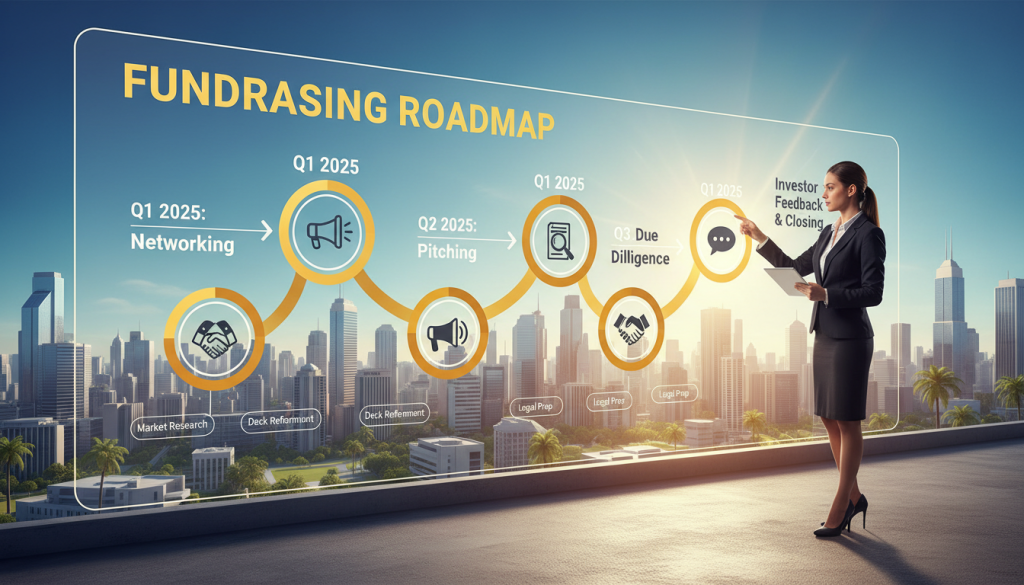
Build a strategic plan linked to outcomes
Write a plan that ties financing to expansion, acquisitions, or technology development. Avoid vague uses like “general corporate purposes.”
Refresh forward-looking projections
Update 2026 forecasts with clear assumptions: pricing, churn, gross margin, working capital, and capex. Show stress cases lenders and investors will run.
Get financials investor-ready
Present a clean income statement, balance sheet, and a cash flow bridge that explains where money goes and when.
Strengthen risk and compliance before diligence
Resolve regulatory items and operational dependencies early. That reduces questions and keeps the process moving.
Engage banks, institutions, and advisors early
Talk to lenders and institutional investors ahead of time. Early engagement shortens time-to-close and sharpens terms.
“Compress the cycle without compromising credibility.”
- Organize your team for fast responses to information requests.
- Sequence materials so diligence only sees final, validated data.
Choose High-Probability Financing Options Beyond the Usual Playbook
We map funding channels to the problem you must solve now. The fastest option is the one that fits your model and timing.

Crowdfunding: equity and royalty models
Equity crowdfunding lets outside investors buy ownership stakes. It works for consumer brands with clear marketing plans.
Royalty-based crowdfunding pays backers a percentage of future revenue. It avoids fixed payments and reduces dilution compared with another equity round.
Peer-to-peer lending and lender alternatives
P2P platforms connect borrowers with individual lenders for faster underwriting. Trade-offs: pricing, platform fees, and borrower reporting.
Venture debt and revenue-based financing
Venture debt suits high-growth companies with equity backers. It limits dilution while adding structured repayment.
Revenue-based financing scales payments with sales. It fits recurring-revenue companies but costs rise if growth stalls.
Cash-flow options, partnerships, grants, and real estate structures
Factoring and invoice financing speed cash collection. Supply-chain programs extend payment terms to stabilize operations.
Strategic joint ventures share costs and resources. Government grants and R&D tax credits free up cash without giving away ownership.
| Option | Best For | Main Trade-offs |
|---|---|---|
| Equity crowdfunding | Consumer brands, high-visibility launches | Marketing lift; ownership dilution |
| Royalty crowdfunding | Revenue-generating products | Ongoing payment share; less dilution |
| Peer-to-peer lending | Short-term working cash | Higher rates; platform reporting |
| Venture debt | High-growth companies with backers | Covenants; scheduled repayments |
| Revenue-based financing | Recurring-revenue companies | Payments vary with sales; cap-based exit |
“Pick the way that preserves flexibility for your next move.”
Conclusion
Conclude by setting the next priorities that preserve control and accelerate execution.
Set the sequence: define strategy, pick the right mix of capital, then execute with a preparation-first roadmap. This keeps timelines tight and outcomes predictable.
The core lesson is simple. The best capital is thesis-aligned capital—matched to the deal, the time horizon, and your management capacity. That alignment drives durable growth and buyer confidence.
Protect control by cleaning information and responding fast. Clear materials and quick answers often decide investor choices.
If you’re actively acquiring or seeking capital for high-quality opportunities, schedule a confidential call or reach out via the contact form to get started.